

· By Mark Boston
Eco-Friendly Packaging Trends for Premium Spirits
Last Updated: 7 November 2026
Quick Summary
Eco-friendly packaging for premium spirits centres on three trends: lighter glass, more recycled content, and refill systems that keep bottles in circulation. Lightweighting cuts carbon but risks breakage if overdone, while refill models depend on return logistics. Bring compliance into the design brief early to avoid an expensive rebuild.
- Lightweight glass reduces bottle wall thickness and weight without losing strength or shelf presence.
- More recycled glass content means less furnace energy, cutting weight and embodied carbon together.
- Paper-based and plant-based materials work best as secondary packaging, as paper rarely provides the barrier spirits need.
- Life cycle assessment compares options across raw material, production, transport and disposal, so claims are not guesswork.
- Test labels before a print run, as one that will not release in the wash can contaminate the recycled glass stream.
Want a pour that matches your values?Premium copper pot distilled spiced rum with natural ingredients and dog rescue support.
Explore Quinn's Pour Rum
Table of Contents
- Why Eco-Friendly Packaging Matters for Premium Spirits
- Sustainable Spirits Packaging: Lightweight Glass and Recycled Content
- Refillable Spirits Bottles and the Circular Packaging Model
- Sustainable Closures, Labels and Secondary Packaging
- Alternative Materials: Paper-Based and Plant-Based Packaging
- Measuring Impact and Avoiding Greenwashing
- How Regulations and Retailer Expectations Shape Packaging Design
- Where Premium Spirits Packaging Goes Next
- Frequently Asked Questions
Why Eco-Friendly Packaging Matters for Premium Spirits
Eco-friendly packaging means designing spirit bottles and outer wrapping so materials, weight and end-of-life are considered from the start. Three trends matter most: lighter glass, more recycled content, and refill systems that keep bottles in circulation. To see which eco-friendly rum brands are already putting sustainable packaging into practice, read our round-up. Our own story and sustainability credentials set out what we do and why.
Sustainable Spirits Packaging: Lightweight Glass and Recycled Content
Lightweight glass means reducing bottle wall thickness and weight without losing strength or shelf presence. Glass is often a large part of a bottle's carbon footprint, so lighter glass can help.
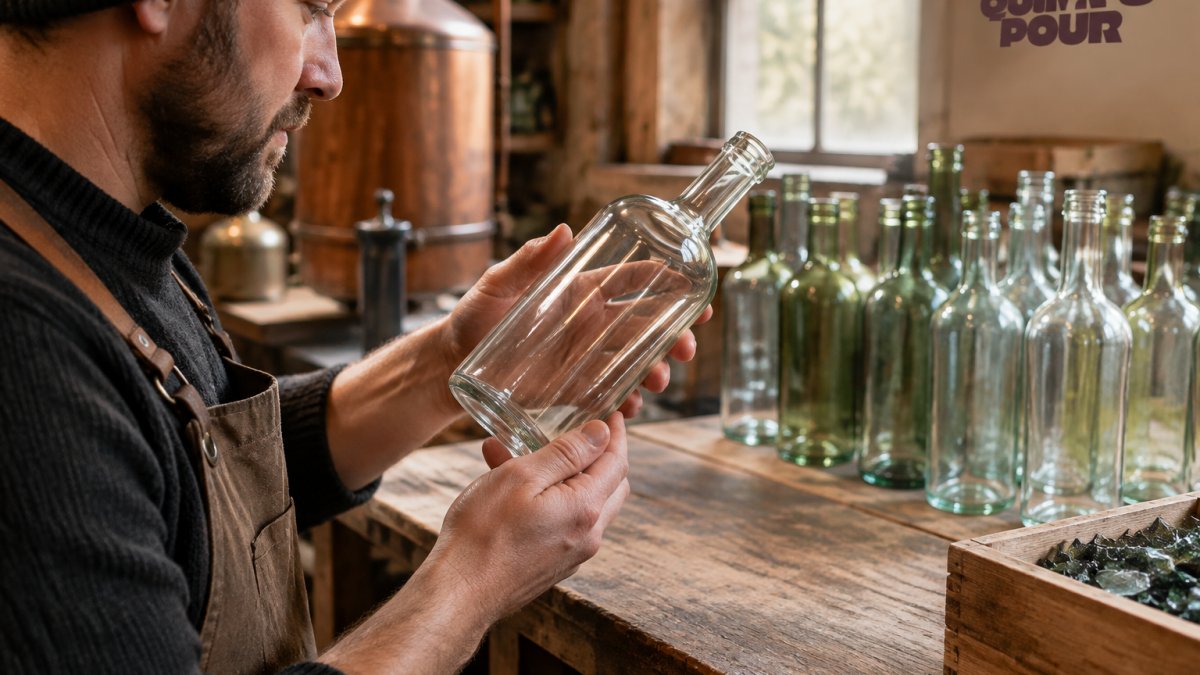
Recycled glass works on the same principle: more recycled content means less furnace energy, cutting weight and embodied carbon at once. Watch out: lightweighting too aggressively can weaken the base and cause breakages in transit. For a deeper look, see our guide to cutting carbon in craft distillery operations.
Refillable Spirits Bottles and the Circular Packaging Model
Our guide to building a sustainable spirits home bar shows how refill and reuse work at a smaller scale, and starting an eco-friendly home bar covers the practical first steps.
Sustainable Closures, Labels and Secondary Packaging
Watch out: a label that will not release in the wash can contaminate the recycled glass stream, so test it before committing to a print run.
Alternative Materials: Paper-Based and Plant-Based Packaging
Paper-based and plant-based materials are now a genuine option for outer packaging, gift sets and secondary wrapping. The honest limitation is protection: paper alone rarely provides the barrier spirits need, so these formats work best as secondary packaging.
Measuring Impact and Avoiding Greenwashing
Life cycle assessment compares packaging options across raw material, production, transport and disposal (Life cycle assessments). Without it, sustainability claims are guesswork dressed up as strategy.
| Trend | Best For | Main Trade-Off |
|---|---|---|
| Lightweight glass | Cutting carbon fast | Breakage risk if overdone |
| Recycled content | Lower furnace energy | Supply and colour variation |
| Refill systems | Keeping glass in use | Return logistics cost |
How Regulations and Retailer Expectations Shape Packaging Design
Packaging compliance is now a design input, not an afterthought. Bring compliance into the design brief early to avoid an expensive rebuild after a rejected format, and check current requirements with the official source before you commit, as thresholds change.
Where Premium Spirits Packaging Goes Next
At Quinn's Pour, we make copper pot distilled spiced rum with natural, vegan-friendly ingredients, and we support dog rescue and welfare work. Explore our range, meet the Pack, and taste the difference for yourself.
The challenge is simple: make your next bottle choice one you can explain. Quinn's Pour offers copper pot distilled spiced rum made with natural, vegan-friendly ingredients, with every purchase supporting dog rescue and welfare initiatives. Get started with Quinn's Pour and pour with purpose.
Frequently Asked Questions
What makes spirits packaging eco-friendly?
Eco-friendly packaging for premium spirits usually means lighter bottles, a higher proportion of recycled glass, and materials that are easy to recycle at end of life. It also covers refillable or reusable systems that keep bottles in circulation. The aim is to cut packaging weight and carbon emissions while still protecting the liquid and keeping the bottle looking premium. Brands should look at the whole lifecycle, not just one material swap.
Is recycled glass suitable for premium spirits bottles?
Yes, recycled glass spirits bottles can meet the same quality and safety standards as new glass. The main things to check are colour consistency, clarity and how the recycled content affects the bottle's strength. Some brands use higher recycled content in darker bottles where minor colour variation is less visible. Ask your supplier for evidence of recycled content and test samples before committing to a full run.
Can spirits bottles be refilled or reused safely?
Refillable spirits bottles can be reused safely when the system is designed for it. That means sturdy bottles that withstand cleaning, closures that seal reliably after multiple uses, and a return or refill route that customers find easy. Hygiene and traceability matter, so work with your bottler on cleaning and inspection. Start with a small pilot programme to test return rates and operational costs before scaling up.


