

· By Mark Boston
How Can You Tell an Authentic Craft Spirit From the Label?
Last Updated: November 7, 2026
Quick Summary
To identify authentic craft spirits, read the back label rather than relying on the polished front. Look for a producer statement, a named distillery, batch or lot codes, and clear ingredient details. Make sure the front and back match before you buy.
- Find the producer statement that names who made or bottled the spirit.
- Check for a named place of production, a good sign of transparency.
- Look for batch or lot codes that help trace a bottle to its production run.
- Confirm the names and details on the front and back labels match.
Ready for a rum you can trust?Quinn's Pour makes copper pot distilled spiced rums with natural, vegan-friendly ingredients.
Join the Pack
Table of Contents
- Reading the Front and Back Labels Step by Step
- Distilled By vs Bottled By: Knowing What Each Phrase Means
- Your Next Step: Checking the Details Before You Buy
- Frequently Asked Questions
Reading the Front and Back Labels Step by Step
Learning how to identify authentic craft spirits on labels starts with the bottle itself. Take your time. The details on a good label can tell you a lot about who made the spirit.
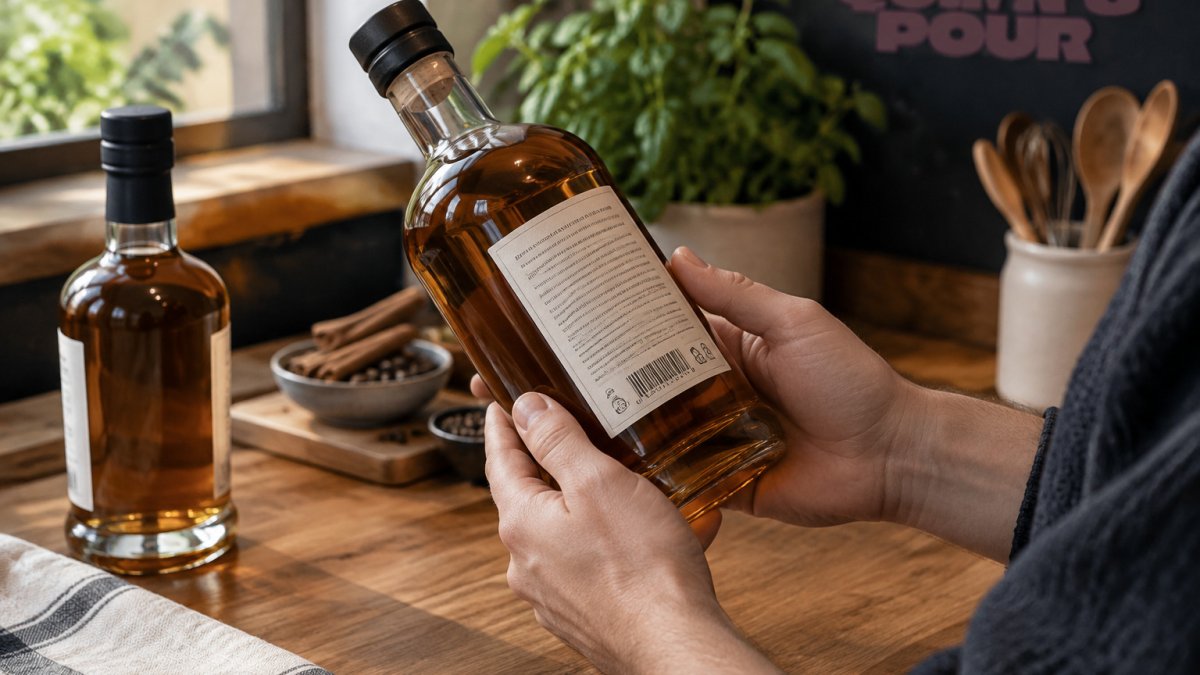
Start with the front label. Look for the brand name, the spirit type, and the alcohol strength. Then turn the bottle around. The back label is where the useful information usually sits.
- Find the producer statement. Look for wording that names who made or bottled the spirit.
- Check the distillery details. A named place of production is a good sign of transparency.
- Look for batch or lot codes. These help trace a bottle back to its production run.
- Read the ingredients. Clear details about the base spirit and any flavourings show care.
- Compare the front and back. The names and details should match. Mismatches are a warning sign.
A label that looks polished is not proof of quality, so it is worth checking the back label before you buy.
The steps below sum up what to check on each part of the label, in the order the article describes.
| Step | What to check | Why it matters |
|---|---|---|
| 1. Find the producer statement | Wording naming who made or bottled the spirit | Shows who is responsible for the product |
| 2. Check the distillery details | A named place of production | A good sign of transparency |
| 3. Look for batch or lot codes | Codes printed on the bottle | Helps trace the bottle to its production run |
| 4. Read the ingredients | Details of the base spirit and any flavourings | Clear detail shows care |
| 5. Compare front and back | Names and details that match | Mismatches are a warning sign |
Distilled By vs Bottled By: Knowing What Each Phrase Means
Many shoppers mix these terms up, and it matters. "Distilled by" means the spirit was made at that distillery. "Bottled by" means someone else may have packaged it. Both can be honest, but they tell you different things. To see how one craft distillery describes its own operations and sourcing, read our Carbon Craft Distillery operations page.
For more on what the rules say about these statements, see our guide to UK alcohol labelling requirements.
Your Next Step: Checking the Details Before You Buy
Before you buy, run through your checklist. Confirm the producer, the distillery, and the batch details. If anything is missing, ask the seller or choose a different bottle.
If you are curious about what makes a premium spiced rum stand out, our premium craft spiced rum guide explains what to look for. You can also read our small batch craft rum review to compare bottles side by side.
Join the Pack! At Quinn's Pour, we make copper pot distilled spiced rums with natural, vegan-friendly ingredients, and a share of every bottle supports dog rescue and welfare. Ready to taste the difference? Explore our range today.
Frequently Asked Questions
What should you look for on a craft spirit label?
Start with the producer statement on the back label, which should name the company responsible for the spirit and where it is based. Look for a clear distillery name or location, the alcohol by volume (ABV) figure, and any batch or lot code printed on the bottle or closure. Mandatory information on UK spirits labels, including the name of the spirit, net volume and allergen declarations where relevant, must be present and easy to read. If key details are missing or hard to find, treat that as a reason to look more closely before buying.
What is the difference between 'distilled by' and 'bottled by'?
'Distilled by' indicates the business that actually produced the spirit through distillation, while 'bottled by' refers to the company that filled and labelled the finished product. The two can be the same business, but they often are not, particularly where a brand sources spirit from another producer. Neither phrase proves that a spirit is handmade or small-batch on its own. Read both statements together and check whether the named producer matches the brand you are buying.
What should you do if a spirit label seems misleading?
Compare the label against the brand's website and any producer details it publishes, and check whether the distillery and bottler names match. If the wording is vague, such as a craft claim with no supporting information, ask the seller for clarification before purchasing. Buying from a reputable retailer that clearly lists producer details gives you an extra layer of reassurance. If you remain unsure, choose a different bottle rather than relying on the label alone.


