

· By Editorial Team
Cutting Carbon in Craft Distillery Operations
Table of Contents
- Where Does a Craft Distillery's Carbon Footprint Come From?
- Start with a Distillery Energy Audit
- Invest in Energy Efficient Distillation Equipment
- Adopt Distillery Waste Management Best Practices
- Switch to Eco-Friendly Packaging for Spirits
- Cut Transport Emissions in Your Supply Chain
- Track Progress and Certify Your Efforts
- Conclusion: Small Changes, Measurable Impact
- Frequently Asked Questions
Last Updated: September 9, 2026
Where Does a Craft Distillery's Carbon Footprint Come From?
Reducing a craft distillery carbon footprint starts with understanding that the source of most emissions is not the bottling line or the office, but the distillation process itself. Heating large volumes of liquid to boiling point and maintaining that temperature for hours requires enormous amounts of energy, making the boilers and stills the primary contributors. At Quinn's Pour, we use copper pot distillation methods.
The main sources typically fall into four categories. Energy use for heating and cooling dominates, often accounting for the vast majority of a site's total footprint. The second largest source is usually packaging, particularly the production of new glass bottles. Waste handling, including the disposal of spent grains and liquid effluent, comes next, followed by transport emissions from shipping raw materials in and finished product out.
Most guides focus on recycling bins and office lights. The real gains, however, sit in the boiler room. Understanding this distinction shapes where you invest your limited time and budget. The good news is that the technology to address these hotspots exists now, and much of it pays for itself through reduced fuel bills.
Key Takeaway
For most craft distilleries, heating the still accounts for the largest share of emissions. Prioritise energy projects before tackling packaging or transport.
Start with a Distillery Energy Audit
A formal energy audit is the single most effective first step in reducing carbon footprint in craft distillery operations. You cannot manage what you do not measure, and an audit provides the baseline data needed to prioritise investments. Many regional energy agencies and environmental bodies offer subsidised audit schemes for small producers, making this an accessible starting point.
The audit process typically examines your boilers, insulation levels, heat loss through pipework, and the efficiency of your cooling systems. It will also flag behavioural quick wins, such as shutting down equipment during idle periods or reducing standing losses overnight. A common mistake is skipping this stage and purchasing new equipment based on guesswork, which often leads to overspending on kit that does not address the actual problem.
Once you have the audit results, you can rank projects by return on investment. Some fixes, such as lagging uninsulated pipes, cost very little and deliver immediate savings. Others, like replacing a boiler, require significant capital but offer the largest long-term reductions.
Invest in Energy Efficient Distillation Equipment
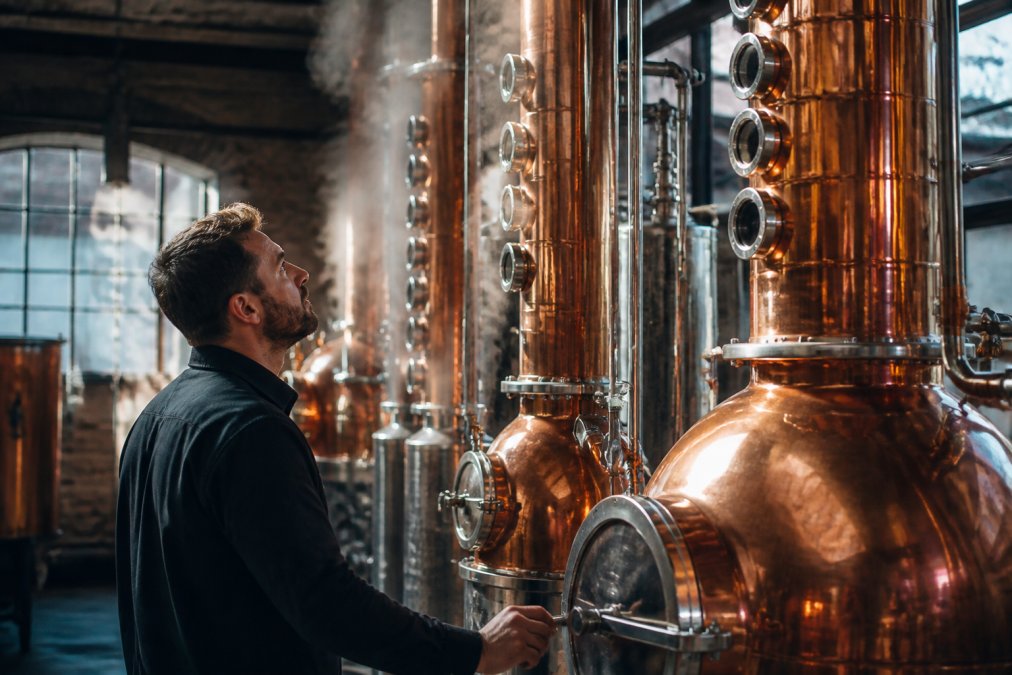
Modern energy efficient distillation equipment goes far beyond simply upgrading the burner. The most significant advances have come from rethinking how heat moves through the system, and the results are measurable. A well-designed system can cut energy use per litre of spirit substantially compared with older, inefficient setups.
Heat Recovery and Column Design
The principle behind heat recovery is straightforward: capture the heat that would otherwise escape and use it to preheat the next batch. In a traditional batch still, the hot liquid is discarded after distillation, taking its heat with it. A heat exchanger transfers that warmth to the incoming wash, reducing the energy required to bring it to boiling point.
Column design matters just as much. Taller columns with better plate efficiency achieve the same separation with less energy input. For producers considering a new still, asking suppliers for specific energy consumption figures per litre of alcohol is essential. A reputable manufacturer will provide these numbers, allowing you to compare options on a like-for-like basis rather than on marketing claims.
Switching to Renewable Energy Sources
Even the most efficient still requires heat, and the fuel you choose determines the craft distillery carbon intensity of that heat. Switching from fossil fuels to renewable energy sources is the most direct way to decarbonise craft distillery operations. Options include biomass boilers fuelled by wood pellets, solar thermal panels for preheating water, and electric stills powered by renewable grid electricity.
The right choice depends on your site and location. Biomass requires space for fuel storage and a reliable supply chain. Electric stills demand a strong electrical connection but offer zero on-site emissions. Many producers start with a hybrid approach, keeping their existing boiler for peak demand while installing renewable capacity for base loads.
Pro Tip
When comparing equipment, ask suppliers for energy use per litre of pure alcohol produced. This metric cuts through marketing language and lets you compare systems honestly.
Adopt Distillery Waste Management Best Practices
Distillery waste management best practices turn a costly problem into a potential revenue stream. The two main waste streams are spent grains, known as draff, and the liquid residue called pot ale or vinasse. Both are rich in nutrients and organic matter, which makes them valuable rather than disposable.
Turning Spent Grains and Pot Ale into Resources
The most established route for spent grains is animal feed. Local farms often collect draff directly, saving you disposal costs and providing them with cheap, nutritious feed. Pot ale can be concentrated into animal feed syrup or processed in an anaerobic digester to generate biogas, which can then power the distillery itself.
Other emerging options include using spent grains in baking, as a substrate for mushroom cultivation, or as an ingredient in pet food. The key is to treat waste as a product with value rather than a cost to be minimised. This shift in mindset is central to effective distillery waste management best practices and often reveals opportunities that were previously overlooked.
Watch Out
Sending pot ale down the drain without treatment can lead to high trade effluent charges from your water company. Investigate anaerobic digestion or animal feed routes before accepting these costs.
Switch to Eco-Friendly Packaging for Spirits
Packaging frequently represents the second largest share of a distillery's carbon footprint, and eco-friendly packaging for spirits is one of the most visible changes a brand can make. The dominant issue is glass production, which is highly energy intensive, and the weight of the bottle directly correlates with its carbon cost.
Lightweight Glass and Recyclable Materials
Reducing bottle weight is the most straightforward win. A lighter bottle requires less energy to produce and less fuel to transport. Many craft distilleries have switched to lighter glass without compromising the premium feel of their product. For a brand like Quinn's Pour, which uses recyclable packaging, this alignment between ethics and aesthetics is central to the offer.
Beyond glass, consider the full packaging system. Are the labels recyclable? Is the closure plastic or metal? Is the outer packaging made from recycled cardboard? Each component contributes to the overall footprint, and small changes accumulate. Some producers have moved to refillable bottles or bag-in-box formats for certain product lines, dramatically reducing packaging weight and cost.
Cut Transport Emissions in Your Supply Chain
Transport emissions often receive less attention than production, but they offer clear opportunities for reducing carbon footprint in craft distillery operations. The key is mapping your entire supply chain, from raw ingredients to the final delivery of finished bottles, and identifying where miles can be eliminated or made cleaner.
For ingredients, sourcing locally reduces the distance travelled by heavy raw materials. For finished goods, consolidating shipments and using rail or sea freight instead of air freight makes a significant difference. Many producers also find that partnering with distributors who use efficient logistics networks reduces the overall emissions per bottle delivered.
The final mile, delivering to customers, is increasingly important for direct-to-consumer brands. Offering click-and-collect options or using couriers with electric vehicles in urban areas can lower the footprint of each delivery. For a business like Quinn's Pour, where customers care about sustainability, communicating these choices strengthens the brand's ethical position.
Track Progress and Certify Your Efforts
Measuring your progress turns good intentions into verifiable results. The most credible way to demonstrate commitment is through third-party certification, which provides independent verification of your claims. This matters for consumer trust, particularly among buyers who are increasingly sceptical of vague environmental marketing.
Options for certification include carbon neutral status through verified offset schemes, or broader sustainability accreditations that cover your entire operation. The process typically requires detailed record keeping and annual reporting, but the outcome is a credible story you can share with customers. It also helps you identify areas where progress has stalled and where further investment is needed.
The UK Government guidance on business energy efficiency provides a useful starting point for understanding available support and reporting expectations. Additionally, the Carbon Trust's resources for SMEs offer practical tools for measuring and reducing emissions. For those exploring certification, the Science Based Targets initiative framework sets a rigorous standard for corporate climate action that is respected across industries.
Conclusion: Small Changes, Measurable Impact
Reducing carbon footprint in craft distillery operations is not a single project but a continuous process of improvement. The path begins with an audit, moves through equipment upgrades and waste reform, and extends to packaging and transport. Each step builds on the last, and the cumulative effect is substantial.
The challenge is that no two distilleries are identical, so your roadmap will differ from your neighbour's. What works for a large grain distillery may not suit a small copper pot operation. The principles, however, remain the same: measure, prioritise, invest, and verify.
For producers who embrace this process, the benefits extend beyond environmental responsibility. Reduced energy and waste costs improve margins, while a credible sustainability story resonates with modern consumers. At Quinn's Pour, we believe that exceptional craft and ethical production are not competing priorities but complementary ones. The smooth, rich flavour of our copper pot distilled rum comes from 100% natural ingredients and recyclable packaging.
Get started with Quinn's Pour and join a community where premium quality supports dog rescue and welfare initiatives.
Frequently Asked Questions
How can craft distilleries reduce energy consumption during distillation?
The biggest savings come from heat recovery systems that capture and reuse warmth from the condenser to pre-heat the next batch. Insulating all pipework and the still itself also cuts heat loss. Modern energy efficient distillation equipment, such as mechanical vapour recompression, can reduce energy use by up to 30% compared to traditional designs. Running stills at a steady, controlled pace rather than full power also improves efficiency. An energy audit will show which upgrades offer the fastest payback for your specific setup.
Are there government grants available for sustainable distillery upgrades?
Yes, several UK schemes support energy efficiency in manufacturing. The Industrial Energy Transformation Fund (IETF) provides funding for projects that cut energy use and carbon emissions. Your local authority may also offer business energy efficiency grants. The Warm Homes Fund and similar schemes sometimes extend to commercial premises. It is worth checking eligibility criteria, as grants often cover feasibility studies as well as equipment installation. A specialist energy consultant can help you identify which funding applies to your distillery's planned upgrades.
How can distilleries manage waste products like pot ale and spent grains sustainably?
Spent grains and pot ale are packed with nutrients, making them valuable resources rather than waste. Many craft distilleries send spent grains to local farms for animal feed, which reduces landfill and supports the local economy. Pot ale can be processed into liquid fertiliser, or fed to an anaerobic digester to generate biogas that powers the site. These distillery waste management best practices close the loop on production and can even create a secondary income stream.


