

· By Editorial Team
Why Small Batch Spirits Taste Better (2026 Guide)
Table of Contents
- What Does Small Batch Mean in Spirit Production?
- The Difference Between Mass Produced and Craft Spirits
- Copper Pot Distillation Benefits: Why the Still Matters
- How Ingredients and Craftsmanship Shape Flavour
- The Sensory Difference: Tasting Small Batch vs Mass Produced
- How to Identify High Quality Rum Before You Buy
- Is Small Batch Always Better? What to Ignore
- Conclusion: Choose Craft for Taste and Ethics
- Frequently Asked Questions
Last Updated: September 7, 2026
What Does Small Batch Mean in Spirit Production?
Small batch spirits are produced in limited quantities, typically using traditional methods and copper pot stills, allowing distillers to maintain hands-on control over every stage of production. Unlike industrial operations that run continuously to maximise output, small batch production is defined by its scale and its philosophy. The distiller can taste, adjust, and refine each run, treating every bottle as a crafted product rather than a uniform commodity.
This scale directly influences why small batch spirits taste better. When you produce less, you can afford to let flavour develop properly, reject runs that fall short of standard, and experiment with techniques that simply would not be viable in a factory setting. At Quinn's Pour, we have built our entire range around this principle, producing our rums in small batches to ensure each expression meets a premium standard before it reaches your glass.

The Difference Between Mass Produced and Craft Spirits
The gap between mass produced and craft spirits comes down to three factors: time, ingredients, and oversight. Mass produced spirits are engineered for consistency at scale, often using column stills that run continuously and highly refined ingredients chosen for cost efficiency rather than character (britannica.com).
Craft spirits take the opposite approach. Production happens in smaller runs where the distiller monitors the process closely, often tasting throughout the day. The ingredients are selected for their flavour contribution, not their price per litre. This is the difference between mass produced and craft spirits in practice: industrial producers chase uniformity, while craft distillers chase complexity. That complexity is what you taste in the glass, and it is the core reason why small batch spirits taste better to discerning drinkers.
Copper Pot Distillation Benefits: Why the Still Matters
The still is the single most important piece of equipment in determining a spirit's final character. Copper pot distillation benefits flavour in two specific ways: copper removes unwanted sulphur compounds naturally, and the pot still's shape allows heavier flavour compounds to carry through into the final spirit (peer-reviewed research).
Column stills, used in mass production, strip nearly everything from the wash to create a neutral base. Pot stills retain more of the congeners, the flavour-active compounds that give rum its depth and personality. A rum distilled this way keeps notes of the molasses, the spice, and the fermentation character that would otherwise be lost.
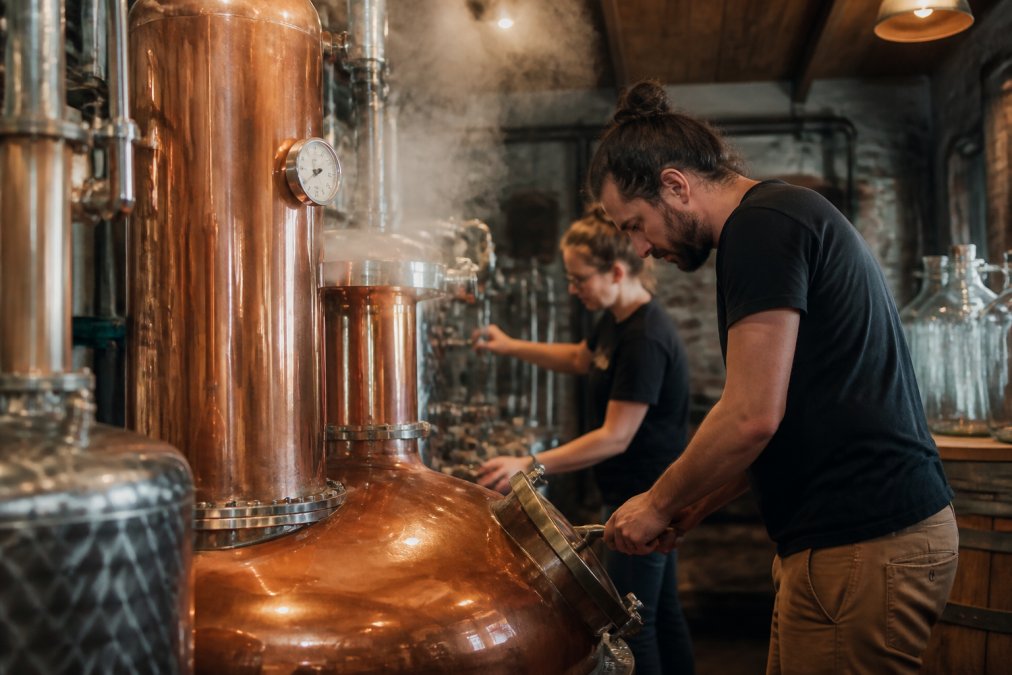
The result is a spirit with texture and warmth that neutral spirits simply lack. When you compare a copper pot distilled rum to a mass produced equivalent side by side, the difference in mouthfeel and aromatic intensity is immediately obvious. This is why copper pot distillation benefits are so highly valued among rum enthusiasts.
Pro Tip
Look for the words "copper pot distilled" on the label. This tells you the producer chose a traditional method that preserves flavour, rather than a continuous column process that prioritises volume.
How Ingredients and Craftsmanship Shape Flavour
Ingredients matter more in small batch production because there is nowhere to hide. A mass produced spirit can be filtered, blended, and chemically adjusted to mask off-notes. A small batch rum relies on the quality of its raw materials and the skill of the distiller to get things right.
For a spiced rum, this is particularly important. Natural spices like vanilla, raisin, citrus, and basil contribute volatile aromatic compounds that are easily lost or overwhelmed by artificial flavourings. Small batch producers typically use whole spices and natural infusions rather than synthetic essences. The craftsmanship lies in knowing how long to steep each ingredient and how to balance the final blend so no single note dominates.
This is where Quinn's Pour focuses its attention. Our rums use 100% natural, vegan-friendly ingredients, allowing the character of the base spirit and the spices to come through clearly. The result is a noticeably different tasting experience compared to mass produced spiced rums that rely on artificial flavourings to achieve consistency.
The Sensory Difference: Tasting Small Batch vs Mass Produced
Tasting the two side by side reveals the difference immediately. A mass produced spiced rum typically presents a single, uniform flavour profile, often dominated by vanilla or caramel notes from added sugar and essence. It is smooth in a way that can feel flat, with little evolution in the glass.
A small batch rum offers a journey. The initial aroma is more complex, with distinct layers that shift as the spirit opens up. On the palate, you notice the texture first, often richer and more viscous due to the congeners retained through pot distillation. The finish lingers longer, with spice notes developing and fading gradually rather than disappearing instantly.
This sensory depth is the practical answer to why small batch spirits taste better. Your palate registers the difference not as one dominant note, but as a balanced symphony of flavours that rewards slow sipping. For anyone moving from mass produced to craft, the shift in quality is unmistakable within the first sip.
Key Takeaway
The most reliable way to tell a craft spirit from a mass produced one is to let it sit in the glass for ten minutes. A small batch rum will continue to open up and develop, while a mass produced spirit stays static.
How to Identify High Quality Rum Before You Buy
Knowing how to identify high quality rum starts with reading the label critically. Look for three things: the production method, the ingredient list, and the absence of artificial additives. If the label states copper pot distillation, that is a strong indicator of traditional methods.
The ingredients tell you whether the producer prioritised flavour or cost. Natural spices and real botanical ingredients suggest a more considered approach, while vague terms like "natural flavourings" can hide artificial essences. For vegan drinkers, check that no non-vegan processing aids were used, as some rums use honey or other animal-derived products in their spiced blends.
Price is also a signal, though not a guarantee. Small batch production costs more because it uses more labour, better ingredients, and produces less volume. When you see a premium price on a craft rum, you are paying for those factors rather than marketing. The best way to confirm quality is to try a tasting pack before committing to a full bottle, which lets you compare expressions and find the profile that suits your palate.
Is Small Batch Always Better? What to Ignore
Small batch is not automatically a guarantee of quality. The term itself is not strictly regulated, so some producers use it loosely to justify premium pricing (ttb.gov). What matters is what sits behind the phrase: the actual production methods, the transparency of the ingredients, and the skill of the distiller.
Ignore marketing language that promises flavour without explaining how it is achieved. A brand that talks about "artisanal" methods but uses artificial flavourings is trading on imagery rather than craftsmanship. Similarly, be wary of rums that rely heavily on added sugar to create a false sense of smoothness, a common trick in mass produced spiced rums.
What you should trust is specificity. A producer who names their distillation method, lists their natural ingredients, and explains their process is demonstrating confidence in their product. This transparency is the real marker of craft, and it aligns with the ethical values many conscious buyers look for, including sustainable production and recyclable packaging.
Conclusion: Choose Craft for Taste and Ethics
The evidence is in the glass. Why small batch spirits taste better comes down to production methods that preserve flavour, ingredients chosen for character, and a level of oversight that mass production cannot match. When you choose craft, you are not just buying a drink, you are supporting a different way of making things.
That ethos extends beyond flavour. Small batch producers tend to operate more sustainably, using natural ingredients and considering their environmental impact. At Quinn's Pour, every bottle is copper pot distilled with 100% natural, vegan-friendly ingredients, and a portion of proceeds supports dog rescue and welfare initiatives. It is a choice that satisfies the palate and the conscience.
If you are curious to taste the difference for yourself, our Companion's Gift Pack offers three handcrafted spiced rums in tasting sizes, perfect for exploring the range before committing to a full bottle.
Frequently Asked Questions
What does 'small batch' actually mean in spirit production?
Small batch means spirits are produced in limited quantities, often using traditional copper pot stills rather than industrial continuous columns. While no single legal definition exists, small batch typically refers to batches measured in hundreds or low thousands of litres rather than millions. This scale lets distillers monitor each run closely, adjust cuts by taste, and maintain tighter quality control. The result is a spirit with more character and variation between batches, reflecting the craft of the distiller rather than the efficiency of a factory line.
Does small batch production guarantee better flavour?
Small batch production does not automatically guarantee better flavour, but it creates conditions where better flavour is far more likely. Smaller stills and runs allow distillers to make precise cuts, discarding harsh heads and tails to keep only the smoothest heart of the spirit. Combined with quality ingredients and careful maturation, this attention produces a cleaner, more complex taste. However, a poorly made small batch spirit can still disappoint. The scale enables quality, but the distiller's skill and ingredient choices ultimately decide how well it tastes.
How does copper pot distillation affect the taste of rum?
Copper pot distillation benefits rum by removing unwanted sulphur compounds that create rubbery or eggy notes. As vapour passes through the copper, chemical reactions neutralise these impurities, leaving a cleaner, more refined spirit. Pot stills also produce a heavier, richer spirit with more congeners, the compounds responsible for depth and complexity. This is why many premium rums, including spiced varieties, use copper pot distillation. The process delivers a smoother mouthfeel and allows the natural flavours of molasses, vanilla, and spice to shine through more clearly.
Why do mass-produced spirits often taste different to craft alternatives?
Mass-produced spirits are designed for consistency and scale, using continuous column stills that create a lighter, more neutral alcohol. Producers often add sugar, artificial flavourings, and colourings to replicate taste across millions of bottles. Craft spirits, by contrast, rely on 100% natural ingredients and smaller copper pot stills, which retain more of the raw material's character. The difference is like comparing a mass-produced loaf to one from an artisan bakery: both are bread, but the ingredients, process, and attention create a noticeably different result.
Are there industry regulations defining 'small batch' spirits?
In the UK, no strict legal definition exists for 'small batch' or 'craft' spirits, unlike protected terms such as 'single malt' or 'pot still'. This means the label relies on the distiller's integrity. Reputable producers are transparent about their batch sizes, distillation methods, and ingredients. When choosing a spirit, look for details like copper pot distillation, natural ingredients, and batch numbers on the bottle. These signals indicate genuine small-scale production rather than a marketing label applied to mass-produced liquid.
Choosing a premium spirit should not mean compromising your values. Quinn's Pour delivers smooth, rich, copper pot distilled rums made with natural ingredients and sustainable practices, while supporting dog rescue with every purchase. Join the Pack and explore our range to find a rum that tastes as good as it does good.


