

· By Editorial Team
How to Start an Eco-Friendly Home Bar: A Simple Guide
Last Updated: October 22, 2026
Quick Summary
To start an eco-friendly home bar, buy less and choose better: stock three spirits you enjoy, add mixers as needed, and plan low-waste cocktails before you shop. Look for small distilleries using natural ingredients and recyclable or refillable packaging, then measure every pour and reuse peels and stems.
- Start with three spirits you genuinely enjoy rather than buying a full bar at once.
- Seek out bottles with natural ingredients, a named distillery and recyclable or refillable packaging.
- Plan your cocktail menu before shopping so no bottle or mixer sits unused.
- Use a jigger every pour to cut over-pouring and get more drinks per bottle.
- Grow basil, mint or thyme in small pots for fresh, plastic-free garnishes.
Table of Contents
- What You'll Need to Start an Eco-Friendly Home Bar
- Step 1: Choose Sustainable Spirits for Your Home Bar
- Step 2: Stock Your Home Bar Essentials for Beginners
- Step 3: Plan Low-Waste Cocktails from the Start
- Step 4: Pick Sustainable Cocktail Garnishes
- Step 5: Learn How to Reduce Cocktail Waste at Home
- Common Mistakes to Avoid When Building an Eco-Friendly Home Bar
- Conclusion
- Frequently Asked Questions
What You'll Need to Start an Eco-Friendly Home Bar
Building an eco-friendly home bar starts with a simple shift in thinking: buy less, choose better, and waste nothing. At Quinn's Pour, we've learned that a thoughtful setup beats a crowded shelf every time.
You don't need dozens of bottles. You need a few good ones, the right glassware, and a plan for using every last drop. Below, we'll show you exactly how to build a beginner's home bar kit that's kind to the planet, plus the small habits that keep waste low.
Here's what most guides get wrong: they tell you to buy everything at once. Don't. Start small, add as you go, and let your bar grow with your taste.
Step 1: Choose Sustainable Spirits for Your Home Bar
The bottle is where your eco-friendly home bar makes its biggest statement. Look for small distilleries that distil locally, use natural ingredients, and package with care.
Our own rums are handcrafted near Buckinghamshire from premium Caribbean rum, distilled in copper pot stills, and blended with natural, vegan-friendly spices. That's the kind of transparency worth seeking out.
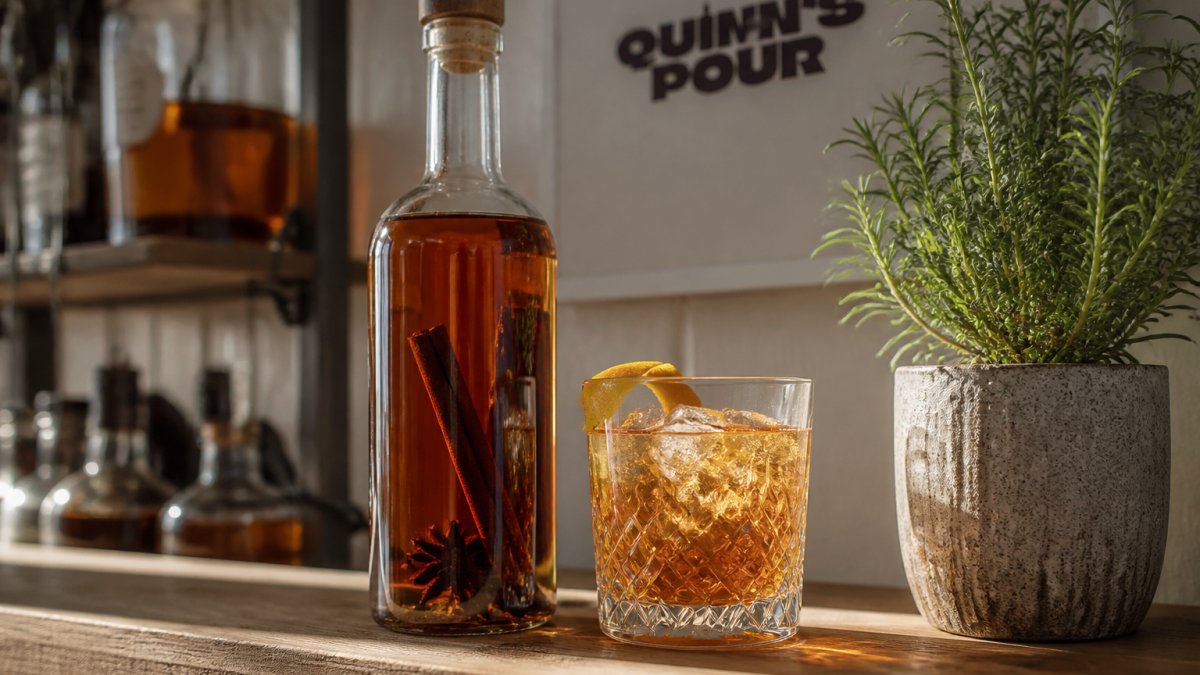
What to Look for on a Bottle
- Natural ingredients, with no artificial flavourings
- A named distillery and a clear production method
- Recyclable or refillable packaging
- Vegan-friendly claims you can actually verify
- Local or short-distance shipping where possible
The Vegan Society's guide to vegan alcohol explains how to check a drink is genuinely vegan-friendly, which is a good starting point before you buy.
Pro Tip
Ask a small distillery directly about their ingredients and packaging. Good makers are proud to answer, and a vague reply tells you plenty.
Step 2: Stock Your Home Bar Essentials for Beginners
A beginner's bar needs very little. Start with three spirits you genuinely enjoy, then add mixers that do the heavy lifting.
For a compact, low-waste setup, we'd suggest:
- One golden or spiced rum, like our Golden Spiced Citrus N' Basil Rum (£40.00)
- One dark sipper, such as our Black Spiced Vanilla N' Raisin Rum (£40.00)
- One versatile mixer-friendly bottle, like our Coffee Spiced Caramel Latte Rum (£35.00)
- A good ginger ale, plus cola or lemonade
- Fresh citrus, ice, and a jigger
If you'd rather try a few at once, The Rum Litter Pack (£105.00) bundles all three. It's a smart way to build a home bar essentials for beginners collection without overbuying.

Step 3: Plan Low-Waste Cocktails from the Start
Low-waste cocktails begin with a plan. Decide what you'll make before you shop, so nothing sits unused at the back of the fridge.
Simple, spirit-forward drinks waste the least. Think rum and ginger ale, a rum old fashioned, or a coffee rum over ice. Fewer ingredients means fewer leftovers.
- Batch your syrups in small amounts
- Use whole fruit rather than bottled juice
- Freeze leftover citrus juice in ice cube trays
- Keep a "use first" shelf for open bottles
Key Takeaway
The most sustainable cocktail is the one you actually finish. Build a short menu around bottles you love.
Step 4: Pick Sustainable Cocktail Garnishes
Sustainable cocktail garnishes come from your own kitchen more often than you'd think. Herb stems, citrus peels, and bruised fruit all earn a second life.
Golden Spiced Citrus N' Basil Rum 70cl →
A twist of orange peel adds aroma without waste. A sprig of basil from a windowsill pot is fresher than anything shipped in plastic. Dehydrate citrus slices instead of binning them.
- Grow basil, mint, or thyme in small pots
- Dehydrate peels for shelf-stable garnishes
- Use herb stems for infused syrups
- Compost what you can't reuse
The WRAP food waste guidance is a useful reminder that small kitchen habits add up over a year.
Step 5: Learn How to Reduce Cocktail Waste at Home
Reducing cocktail waste at home comes down to three habits: measure, store, and reuse. A jigger stops over-pouring, and airtight storage keeps open bottles fresh.
Here's a quick reference for the habits that matter most:
| Habit | What to Do | Why It Helps |
|---|---|---|
| Measure | Use a jigger every pour | Less over-pouring, more drinks per bottle |
| Store | Keep bottles sealed and cool | Slower flavour loss |
| Reuse | Repurpose peels and stems | Fewer trips to the bin |
| Batch | Make small syrup batches | Nothing spoils unused |
| Plan | Shop to a short menu | No forgotten bottles |
Watch Out
Leaving open bottles in warm sunlight flattens the flavour fast. Store them sealed and out of direct light, or you'll pour good rum down the sink.
Common Mistakes to Avoid When Building an Eco-Friendly Home Bar
The biggest mistake is buying a huge bar in one go. Bottles go stale, mixers expire, and money is wasted. Start with three spirits and grow slowly.
A second slip is ignoring packaging. Glass is recyclable, but refill schemes and local makers cut waste further. Finally, don't chase trends over taste. Buy what you'll drink.
- Don't overbuy before you know your taste
- Don't bin citrus before using the peel
- Don't ignore refill or return schemes
- Don't buy plastic-heavy mixers if glass is available
Choosing a purpose-driven brand helps too. Quinn's Pour uses natural, vegan-friendly ingredients and supports dog rescue and welfare initiatives, so every pour does a little good.
Conclusion
Starting an eco-friendly home bar is really about small, steady choices: fewer bottles, natural spirits, and a habit of using every last peel. It's a warmer, more thoughtful way to drink.
If you'd like a rum that matches that ethos, our copper pot distilled spiced rums are crafted with natural ingredients and a purpose. Explore the range and join the Pack.
Frequently Asked Questions
How do I start an eco-friendly home bar without spending a fortune?
Start with a small core kit: a jigger, a bar spoon, a shaker, a strainer and two sturdy glasses. Buy one good bottle of sustainably made spiced rum, such as Quinn's Pour Golden Spiced Citrus N' Basil Rum at £40, then add mixers and fresh fruit as you go. Reuse glass jars for syrups and choose second-hand bar tools where you can. This keeps costs low and avoids buying kit you will not use.
What are the home bar essentials for beginners who want to be greener?
You need a shaker, jigger, strainer, bar spoon, ice bucket and a couple of good glasses. For a greener setup, add a reusable citrus press, glass straws and airtight jars for syrups. Skip single-use plastic stirrers and paper napkins. A bottle of craft spiced rum like Quinn's Pour Black Spiced Vanilla N' Raisin Rum at £40 gives you a versatile base for many low-waste cocktails.
How can I reduce cocktail waste when making drinks at home?
Plan your drinks around what you already have. Use whole fruits, freeze leftover juice into ice cubes and turn citrus peels into syrups or garnishes. Measure with a jigger so you do not over-pour, and batch cocktails for guests to avoid half-full glasses. Compost fruit scraps and rinse and reuse bottles. These small habits cut waste and save money over time.
What should I look for when choosing a sustainable spirit for my home bar?
Look for clear information about how the spirit is made, where it comes from and what is in it. A brand that explains its distillation process and ingredient sourcing is a good sign. Quinn's Pour, for example, states its rums are handcrafted near Buckinghamshire using Caribbean rum and natural ingredients. Choose bottles that fit your taste and values, and buy from brands that share details openly.
An eco-friendly home bar doesn't have to be complicated or costly. Start with a bottle you love, plan a short cocktail menu, and let the small habits do the rest. At Quinn's Pour, our handcrafted spiced rums are made for exactly this kind of thoughtful sipping. Get started with Quinn's Pour and build a bar you're proud to share.


