

· By Mark Boston
Are Carbon Neutral Spirits Worth Drinking?
Last Updated: November 13, 2026
Quick Summary
Drinking carbon neutral spirits supports lower-emission production and signals demand for it, as distilleries that measure emissions usually do so because a buyer, retailer or certifier asked. The benefit is leverage, not a promise that the alcohol itself is harmless, so treat it as an environmental claim rather than a health one.
- Carbon neutral means emissions are measured, reduced where possible, and the remaining balance removed or offset.
- A bottle's footprint is dominated by the agricultural ingredient, the glass and the journey to the shelf.
- Credible claims separate emissions into scopes and state which scopes they cover.
- Check whether reductions are described before offsets are mentioned when judging a brand.
- A facility claim is not the same as a claim about the bottle in your hand.
Want a rum that gives something back?Copper pot distilled spiced rum with natural ingredients, supporting dog rescue and welfare.
Shop Quinn's Pour Rum
Table of Contents
- What Does Carbon Neutral Mean for a Bottle of Spirits?
- The Carbon Footprint of Spirits: Where Emissions Come From
- How Distilleries Reduce Carbon Emissions
- The Real Benefits of Drinking Carbon Neutral Spirits
- How to Choose Sustainable Spirits Without Being Greenwashed
- Join the Pack: Choosing a Bottle That Matches Your Values
- Frequently Asked Questions
What Does Carbon Neutral Mean for a Bottle of Spirits?
Carbon neutral means the greenhouse gases released while making, bottling and shipping a product have been measured, reduced where possible, and the remaining balance removed or offset. For a bottle of spirits, that covers growing the raw ingredient, distilling it, making the glass, and transport.
It is a balance, not a promise of zero impact. Much of a bottle's emissions can sit in farming, glass and freight rather than the still itself, which is why the claims worth trusting explain where the reductions actually happened. If you want to see how packaging fits into that sum, our piece on eco-friendly packaging trends for premium spirits looks at glass weight, recycled content and label stock in more detail.
Carbon neutral is best understood as a claim about a measured total, not a mood. Anyone can print it on a label; fewer can show you the working.
The Carbon Footprint of Spirits: Where Emissions Come From
The carbon footprint of spirits is dominated by three things: the agricultural ingredient, the bottle, and the journey to the shelf. Distillation is energy-hungry, but it is rarely the whole story.
- Growing the base ingredient brings fertiliser, land use and fuel for harvest
- Distillation and bottling bring heat, electricity and glass production
- Transport and chill chains bring freight miles and refrigeration
- Packaging extras bring cartons, closures and gift set materials
That ordering matters for buyers. A distillery can switch to renewable electricity and still carry a footprint if its glass is heavy and its bottles travel far. When you compare products, ask which of these four the brand has actually tackled.
How Distilleries Reduce Carbon Emissions
Distilleries reduce carbon emissions by changing how they buy energy, how they handle waste, and how much material they move. The practical levers are well understood, even if not every maker pulls all of them, and the order in which a distillery tackles them tells you more about a claim than the claim itself.
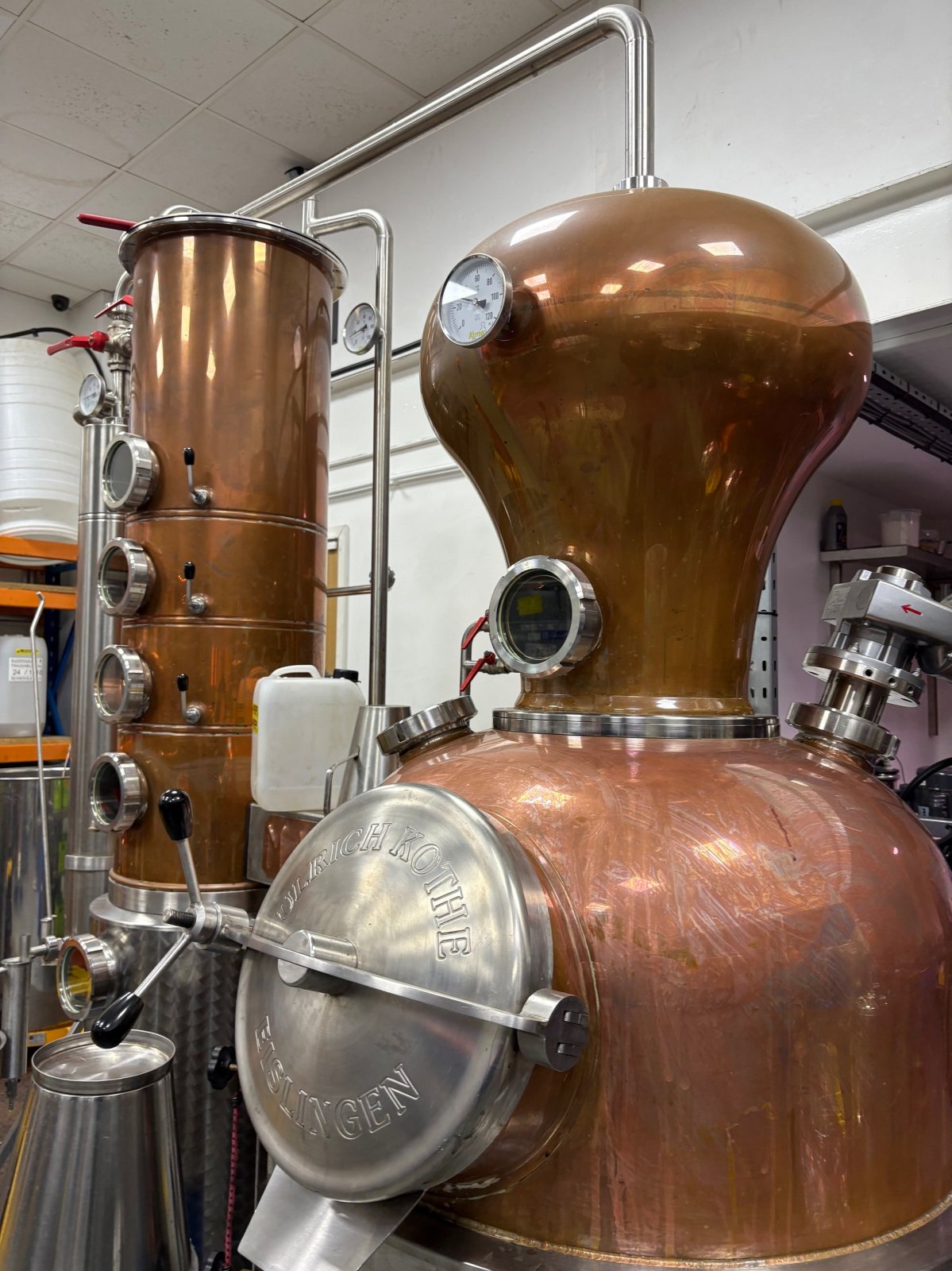
Energy first. Renewable electricity and on-site generation cut the power side, while heat recovery and better boiler control cut the energy demand itself.
Waste second. Sending spent grain and other by-products to animal feed or anaerobic digestion keeps material out of landfill and avoids the methane it would otherwise release.
Materials third. Lighter bottles, recycled glass and fewer outer cartons can reduce the material input in a bottle, and glass is energy-intensive to make and heavy to ship.
Sourcing fourth. Grain and botanicals sourced closer to home trim freight, and better soil management on the growing side reduces fertiliser-related emissions. This is the hardest lever to verify because it sits upstream of the distillery gate.
Where claims diverge is in how these reductions are measured. A credible carbon neutral claim usually separates emissions into scopes: direct fuel burned on site, purchased energy, and the upstream and downstream chain including farming, glass and freight. The chain share can be significant and is often less directly controlled by the distiller, which is why stronger claims state which scopes they cover.
Some producers reduce what they can, then offset the residual through a named scheme. That is legitimate, but it is not the same as removing carbon directly, and the two should not be blurred. Watch out: a claim that says a facility is carbon neutral is not the same as a claim that the bottle in your hand is, the boundary matters.
For a deeper look at how these changes stack up in a working distillery, our article on carbon-cutting craft distillery operations walks through the operational side.
The Real Benefits of Drinking Carbon Neutral Spirits
The benefits of drinking carbon neutral spirits are real but narrower than the marketing suggests. You are supporting lower-emission production and signalling demand for it. The honest split is between what your choice changes on the environmental side and what it does for you personally.
On the environmental side, the benefit is leverage. A distillery that has measured its emissions has usually done so because a buyer, a retailer or a certifier asked. Every bottle sold on that basis keeps the measurement commercially worthwhile. The practical effects can show up in four places:
- Energy, renewable electricity and heat recovery displace fossil fuel, so the same bottle carries a lower operational footprint
- Waste, spent grain and other by-products go to animal feed or digestion rather than landfill, which cuts methane
- Packaging, lighter glass and recycled content reduce the single heaviest material input in most bottles
- Sourcing, shorter freight routes and better soil management trim the agricultural share of the footprint
On the personal side, the benefit is a clearer conscience and, often, a better-made product. Some distilleries that measure emissions also measure other things, such as batch consistency, ingredient provenance and water use.
What it does not do is make the alcohol itself harmless. Responsible drinking guidance applies exactly as it does to any other bottle, and the carbon credential says nothing about units, strength or health. Treat carbon neutral as an environmental claim, not a health one.
There is also a trade-off worth naming. A carbon neutral product can still carry residual emissions that are offset rather than removed, and the quality of those offsets varies enormously. Choosing carbon neutral rewards the makers doing the harder work, but it does not absolve you of checking what sits behind the label, which is exactly what the next section covers.
If you are building a home setup around these choices, our guide to sustainable spirits home bars covers the practical next steps.
How to Choose Sustainable Spirits Without Being Greenwashed
Choosing sustainable spirits without being greenwashed comes down to evidence. A label claim is a starting point; the paperwork behind it is the test.
- Does the brand say what it measured, not just that it is neutral?
- Is there a named certifier or a published methodology?
- Are reductions described before offsets are mentioned?
- Is the packaging genuinely lighter or recycled, or just described as eco?
- Can you find the claim explained on the brand's own site?
Watch out: vague claims such as "eco-friendly" or "planet-positive" with no measurement behind them are worth questioning.
| Claim type | What it usually means | How much to trust it |
|---|---|---|
| Certified carbon neutral | Measured, verified, offset | Strong, if the certifier is named |
| "Carbon neutral" with no detail | Self-declared, unclear scope | Weak until explained |
| "Eco-friendly packaging" | Lighter or recycled material | Check the specifics |
| "Sustainable sourcing" | Supplier standards, often unstated | Ask which standards |
For a vetted starting point, our round-up of eco-friendly rum brands compares makers on exactly these points.
Join the Pack: Choosing a Bottle That Matches Your Values
Choosing a bottle that matches your values means matching the credential to the thing you actually care about. If it is lower-emission production, look for measurement. If it is animal welfare, look for a brand that puts its money where its label is.
At Quinn's Pour, our copper pot distilled spiced rums are made with natural, vegan-friendly ingredients, and our purpose is to support dog rescue and welfare initiatives. That is a different kind of value match from a carbon number, and we would rather be clear about which one we offer than blur the two. If you want a bottle to start with, our Black Spiced Vanilla N Raisin Rum is the one most people try first.

The gap between a label claim and a real credential is where most buyers get caught out. We would rather you bought from us because the bottle earns it: copper pot distilled, natural ingredients, and a purchase that helps dogs in rescue. Get started with Quinn's Pour and pick a bottle that matches what you actually care about.
Frequently Asked Questions
What does carbon neutral actually mean for a spirit?
It means the emissions produced while making, bottling and transporting the drink are measured, then balanced by removing or offsetting an equivalent amount of CO2. The tricky part is that brands set their own boundaries. Some count everything from growing the ingredients to the bottle reaching your door, while others only look at the distillery itself. When a label says carbon neutral, look for the detail behind it: what was measured, who checked it, and how the remaining emissions were dealt with.
Are carbon neutral spirits genuinely better for the environment?
They can be, but the label alone does not prove it. A carbon neutral spirit has usually cut energy use, switched to renewable electricity or changed how it handles waste before dealing with what is left. That is a meaningful difference from a conventional bottle. The caveat is that balancing emissions does not erase the resources used to make the drink. Treat carbon neutral as one useful signal among several, alongside recycled packaging, sustainable sourcing and how the distillery treats its local surroundings.
How can I check whether a spirit's sustainability claims are credible?
Start with the bottle and the brand's website. A credible claim usually names what was measured, the year it was assessed and the organisation that verified it. Vague phrases like eco-friendly or planet-positive without any of that detail are a warning sign. It also helps to look for specifics on renewable electricity, water use and packaging. If a brand cannot tell you how its carbon footprint of spirits was worked out, treat the claim as marketing rather than fact.
Can a spirit really be carbon neutral from production to packaging?
It is possible, but it takes work across the whole chain. Distilleries have to look at fermentation, distillation, the glass bottle, the label, the closure and transport to the customer. Glass is heavy and energy-intensive to make, so many brands move to lighter bottles or recycled materials. Transport emissions matter too. A bottle that is made, filled and sold locally will usually carry a lower footprint than one shipped across the world, which is why smaller craft producers often have an advantage here.


