

· By Mark Boston
Artisanal Spirits: 7 Ways to Spot the Genuine Article
Last Updated: 20 November 2026
Quick Summary
To identify authentic artisanal spirits, check that a named producer controls production from raw materials to the final bottle, then verify the label, producer and distillery yourself. Because artisanal has no legal definition, treat unregulated terms like craft and small batch with caution.
- Read the label in a fixed order, separating legally required information from marketing words.
- Artisanal, handmade, small batch and craft are not protected terms in UK law.
- Trace the producer through a named distillery, a real address and Companies House.
- Taste with a repeatable method, scoring appearance, aroma, palate and finish out of five.
- Use the seven-point checklist before buying any bottle that claims to be artisanal.
Can you spot a genuine craft spirit?Quinn's Pour makes copper pot distilled spiced rum with natural ingredients, and every bottle supports dog rescue.
Join the Pack
Table of Contents
- What Makes a Spirit Artisanal?
- 1. How to Read a Spirits Label
- 2. Traditional Spirit Distillation Methods
- 3. Trace the Producer and Distillery
- 4. Check Ingredients and Botanicals
- 5. Spot Red Flags and Misleading Claims
- 6. Spirit Tasting and Quality Assessment
- 7. Packaging, Design and Visual Cues
- Your Seven-Point Verification Checklist
- Frequently Asked Questions
What Makes a Spirit Artisanal?
Authentic artisanal spirits are made in small batches by a named producer who controls the production process, from raw materials to the final bottle, and that control is what defines artisanal spirits. The term describes how a drink is made, not how it is marketed. At Quinn's Pour, we handcraft our copper pot distilled spiced rums near Buckinghamshire using premium Caribbean rum and natural flavour-forward ingredients.
Here is the part most guides get wrong: "artisanal" has no single legal definition, so anyone can print it on a label. That means you have to verify the claim yourself. Below, we walk through seven practical checks, from reading the label to tasting with purpose, so you can tell real craftsmanship from marketing language. The good news is that most fakes fall apart at step one.
1. How to Read a Spirits Label
A spirits label is your first and best evidence of authenticity, so read it slowly and read it in a fixed order. The trick is to separate what the law requires a producer to declare from what a marketing team has chosen to print. Once you know which is which, vague bottles stand out immediately.
Start with the mandatory information. In the UK, prepacked alcoholic drinks above 1.2% ABV must show the name of the food (the spirit category), the alcohol strength as a percentage, the nominal quantity in millilitres or centilitres, a lot or batch mark, the name and address of the food business responsible, and any required warnings or declarations.
Now the part most guides skip: many of the words that sound most artisanal carry no legal weight at all. "Artisanal", "handmade", "small batch" and "craft" are not protected terms in UK law, so any producer can use them. By contrast, protected geographical indications and traditional specialities are regulated categories with defined production rules, and a producer who genuinely qualifies will usually say so precisely.
Ask five questions of any label, in this order:
- Who is the food business responsible, and is a full address given rather than a PO box?
- What is the spirit category, stated plainly and in the same field of vision as the ABV?
- Is there a lot or batch mark that ties this bottle to a specific run?
- Are the ingredients or botanicals named, or is the label hiding behind "flavourings"?
- Does the label use precise, regulated language, or only unregulated mood words?
Watch out: a batch number that is identical across every bottle you see in a shop, or a lot mark that is just a date, is not the same as a small-batch identifier, it may simply be a legal formality.
If the mandatory answers are missing, treat the "handmade" claim with real caution. If they are present but the craft language is doing all the work, you have found a bottle that is legally compliant and authentically vague, which is exactly the sort of thing the later steps are designed to test.
Five questions to ask of any label, in this order.
| Question | What to look for |
|---|---|
| Who is responsible? | A full address, not a PO box |
| What is the category? | Spirit category stated with the ABV |
| Is there a batch mark? | A lot or batch mark tying the bottle to a run |
| Are ingredients named? | Ingredients or botanicals, not just "flavourings" |
| Is the language precise? | Regulated terms rather than unregulated mood words |
2. Traditional Spirit Distillation Methods
Traditional distillation means the producer uses time-tested equipment and techniques rather than industrial shortcuts. Copper pot stills are the classic example.
If you want the detail on why this method shapes flavour, our guide to copper pot distilled rum explains the benefits of this traditional approach.
3. Trace the Producer and Distillery
Tracing the producer turns a label claim into a verifiable story. Look for a named distillery, a real location, and a person or team behind the bottle. A maker who is happy to be found, with a website, a story and a way to get in touch, is far more accountable than an anonymous brand.
Independently verifying provenance means checking that the distillery exists, that the address matches, and that the production method described is consistent with the equipment they claim to use. Companies House lets you check whether a registered business is real and active. The history of a spirit often explains its methods too, and our piece on the history of spiced rum production shows how Caribbean molasses and Navy traditions shaped modern craft.
4. Check Ingredients and Botanicals
Ingredients tell you how much control the maker really has. A genuine craft producer can usually name their raw materials, whether that is the base spirit, the water, the yeast or the spices. Natural ingredients also behave differently in the glass: real vanilla, citrus peel and spice tend to taste layered rather than flat.
At Quinn's Pour, our rums are blended with flavour-forward ingredients, and we are glad to say so plainly. When a label hides behind "flavourings" with no further detail, ask why. For a deeper look at how base, water, yeast and spices change a drink, read our guide to the ingredients that shape artisanal rum flavour.
5. Spot Red Flags and Misleading Claims
Misleading claims tend to follow a pattern, and once you spot it you cannot unsee it. Watch for heritage language with no dates, "small batch" on a product made in huge volumes, and awards displayed without the awarding body named.
The clearest red flags:
- No producer name or address anywhere on the bottle
- "Craft" used as a standalone word with no supporting detail
- Stock-photo storytelling that never mentions a real place or person
- Prices that are high with nothing on the label to justify them
If you want a benchmark for what premium craft genuinely means, our guide to what makes a premium craft spiced rum sets out the standard we hold ourselves to.
6. Spirit Tasting and Quality Assessment
Tasting is evidence gathering, not just enjoyment, and the difference matters. A fair, repeatable method separates sensory quality from personal preference.
Set up the same way every time. Use a clean glass, pour a small and consistent measure, and taste at the same strength each session, if you are comparing, add the same small splash of water to each so you are judging the spirit rather than the dilution. Keep a notebook and score in the same order: appearance, aroma, palate, finish.
A repeatable method looks like this:
- Note the appearance against a white background and swirl the glass to see the legs.
- Smell before you sip, then smell again after a minute to catch what opens up.
- Taste slowly, letting the spirit reach the whole palate, and note the texture as well as the flavour.
- Write down three words for the flavour and one for the finish.
- Score each of the four stages out of five, then revisit after a minute and see what has changed.
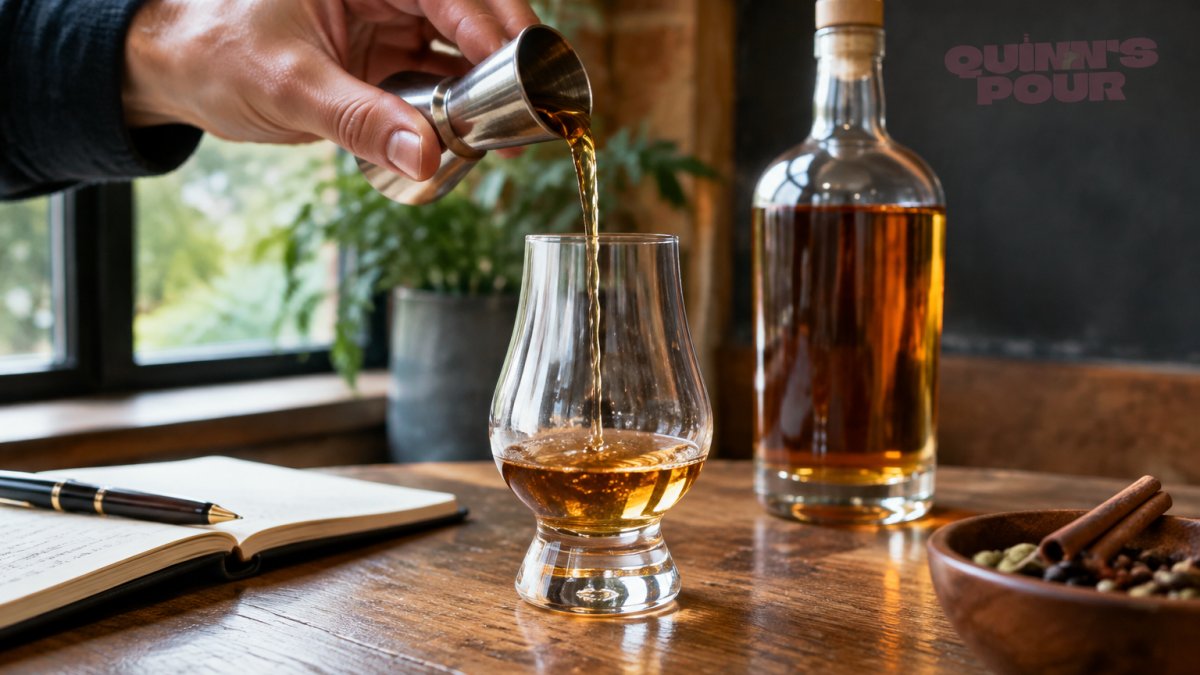
The scoring is where the honesty comes in. A quality spirit tends to smell coherent, taste balanced and finish cleanly, without a harsh edge that suggests rushed production. But a high score is not proof of authenticity, it is proof that the liquid is well made, which is a different claim. A perfectly pleasant spirit can still be mass-produced, and a rough-edged one can still be genuinely small-batch.
Watch out: tasting on its own is the easiest way to be fooled, because a familiar or expensive bottle primes you to taste quality. Taste blind where you can, or at least taste the same spirit twice on different days before you trust your notes.
Once you trust your palate, you will want to serve it properly. Our guide on how to drink spiced rum properly covers temperatures, mixers and tasting techniques.
7. Packaging, Design and Visual Cues
Packaging is a cue, not proof. Good design signals care, but a beautiful bottle proves nothing on its own. Use visual cues to form questions, then answer them with the label and the producer's story.
What to look at:
- Bottle and closure quality: does it feel considered and well made?
- Label clarity: is the essential information easy to find?
- Batch or bottle numbering: does it tie the bottle to a real run?
- Consistency: does the design match the story on the website?
When the packaging, the label and the producer's account all agree, you are on solid ground. When they contradict each other, trust the paperwork.
Your Seven-Point Verification Checklist
Use this checklist before you buy any bottle that claims to be artisanal.
- Producer name and address are on the label
- Spirit category and ABV are stated clearly
- A batch or bottle number is present
- The distillation method is described specifically
- Ingredients or botanicals are named
- The distillery can be found and verified independently
- The packaging and the brand story agree with each other
If a bottle clears all seven, you have done more due diligence than most buyers ever will.
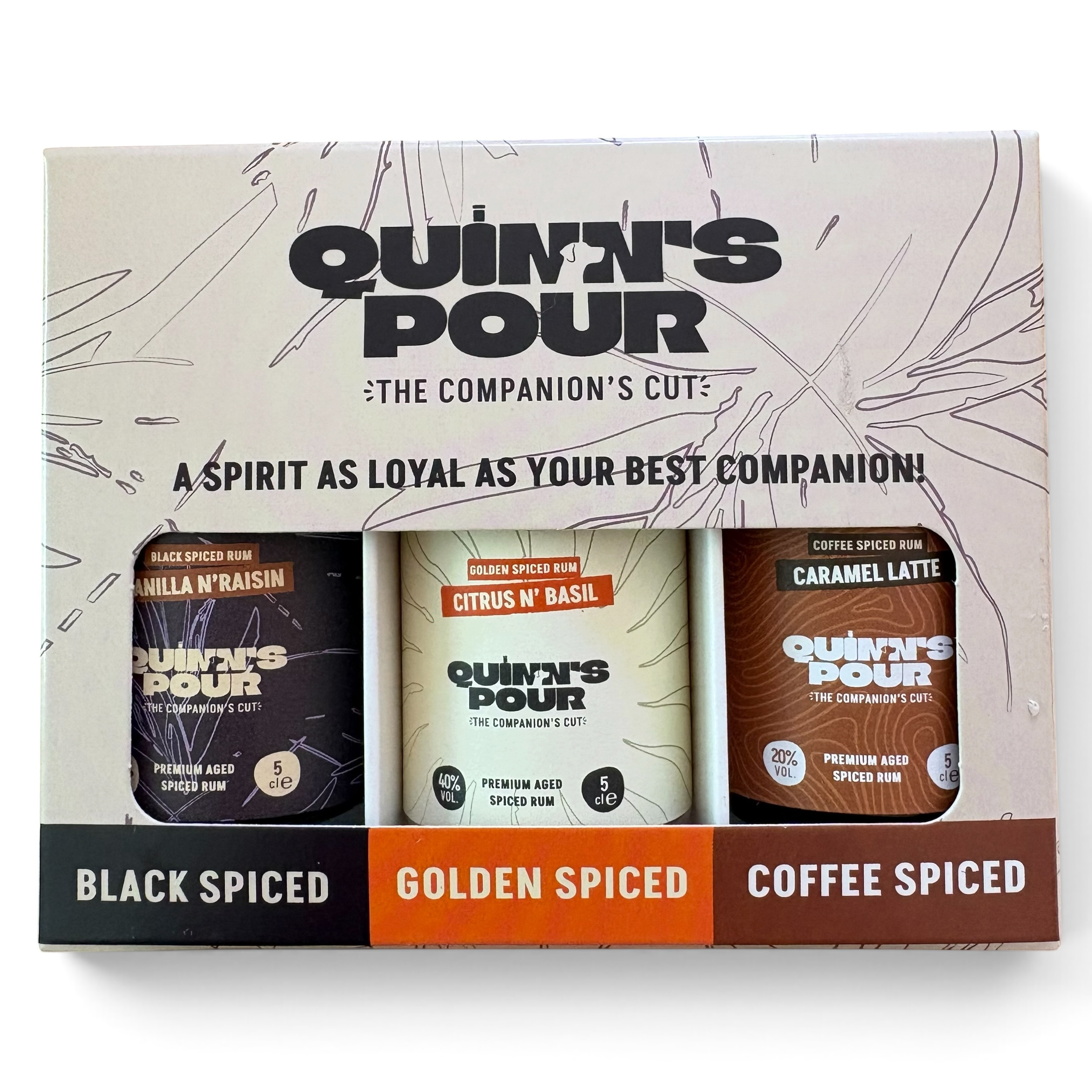
Spotting genuine craft takes a little effort, and that effort is exactly what makes a good bottle worth it. At Quinn's Pour, we make that easy: every rum is handcrafted near Buckinghamshire from premium Caribbean rum, distilled in traditional copper pot stills and blended with 100% natural ingredients, with every purchase supporting dog rescue and welfare work. Start with our Companion's Gift Pack at £20.00 to taste all three expressions, or go straight for the full 70cl bottles, priced from £35.00 to £40.00. Join the Pack and taste the difference for yourself.
Frequently Asked Questions
What makes a spirit artisanal?
A spirit is artisanal when a named producer makes it in small batches, usually in their own distillery, with visible control over the process. Look for traditional methods such as copper pot distillation, clear ingredient information and a batch number on the label. These details show real craft rather than a marketing story, and they help you tell genuine artisanal spirits apart from mass-produced bottles dressed up with craft-style packaging.
How can you tell whether a spirit is genuinely handcrafted?
Start with the label: a genuine craft producer usually names the distillery, gives a batch number and lists ingredients or botanicals. Then check the producer's website for details on traditional spirit distillation methods and the size of their runs. If the bottle gives no producer name, no batch information and no explanation of how it was made, treat the handcrafted claim with caution.
What should you look for on a spirits label?
Check for the producer or distillery name, the batch or bottle number, the ABV, the bottle size in millilitres and any ingredient or botanical information. A clear back label explaining how the spirit was made is a good sign. Vague phrases such as small batch or handmade mean little on their own, so look for specifics that you can verify independently.
How does small-batch distillation affect spirit quality?
Small-batch production gives the distiller more control over each run, so they can make cut decisions by nose and taste rather than by volume alone. That often leads to a more distinctive, consistent flavour. It does not guarantee quality by itself, but combined with traditional spirit distillation methods and clear provenance, it is one of the strongest signals that a bottle is genuinely artisanal.


