

· By Mark Boston
How to Trace the History of Spiced Rum Production in the UK
Last Updated: 4 November 2026
Quick Summary
The history of spiced rum production in the in the UK began with rum shipped from the Caribbean and blended in British ports, then moved towards home distilling and infusing. Royal Navy rum rations shaped British tastes, and craft producers now use maceration or vapour infusion.
- Rum reached Britain through Caribbean trade routes that carried molasses to London, Bristol and Liverpool.
- The Royal Navy issued a diluted daily rum ration from the seventeenth century, softening British expectations of rum.
- Spices arrived through trade networks that predated the rum trade, so port warehouses already held them.
- Maceration steeps spices in spirit for hours to weeks, giving a fuller, rounder flavour.
- Vapour infusion passes spirit vapour through a spice basket, producing a brighter, cleaner result.
Table of Contents
- How Rum Arrived on British Shores
- The Royal Navy and the Daily Rum Ration
- How Spice Entered the Story: Botanicals and Early Infusions
- Importer to Producer: The Economic Shift Behind British Rum
- Regulation, Duty and the Rules That Shaped UK Production
- Craft Spiced Rum Production Methods Today
- Fancy a tasting of Quinn's Pour
- Frequently Asked Questions
Spiced rum has a longer and more tangled history in Britain than most people realise, and the history of spiced rum production in the UK is one that shifted from importing finished bottles to producing them at home. At Quinn's Pour, we have spent a great deal of time with the story of how rum reached British shores, how spice found its way into it, and how today's craft distillers are rewriting the ending. This guide walks you through that journey, one stage at a time.
How Rum Arrived on British Shores
Rum did not begin in Britain. It was distilled from sugarcane molasses in the Caribbean, and it reached the British Isles through the trade networks that bound the colonies to London, Bristol and Liverpool. Those routes carried sugar, molasses and enslaved labour across the Atlantic, and rum was one of the goods that came back.
Trade Routes and the Caribbean Connection
The Caribbean supplied the raw material, and British merchants controlled much of the shipping that carried it home. Molasses was cheap to transport and easy to ferment, which made rum a natural commodity for export. Once in Britain, it was often blended, aged and flavoured before sale, so the drink was shaped as much by the port it landed in as by the island it came from.
The Royal Navy and the Daily Rum Ration
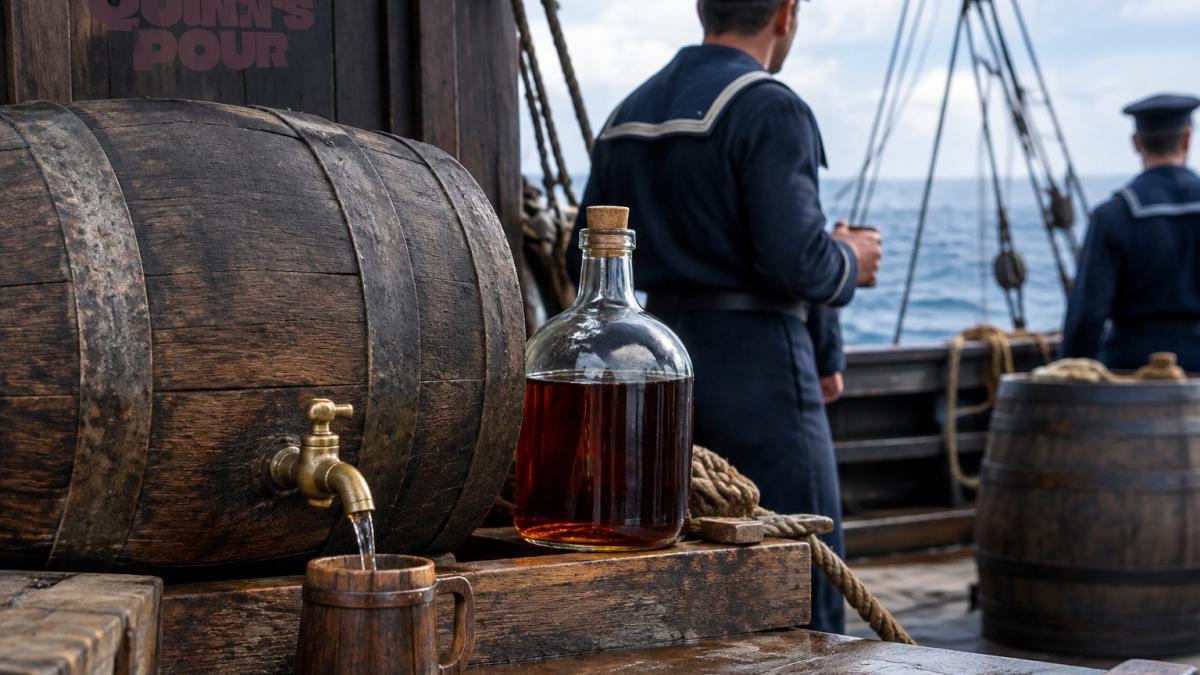
Rum's place in British life was cemented at sea, and the naval ration is the single clearest example of how a service custom shaped the history of spiced rum production in the UK, shaping what people expected rum to taste like. The Royal Navy began issuing a daily spirit ration in the seventeenth century, and by the eighteenth it had settled on rum as the standard issue. The ration was not a generous pour of neat spirit: it was routinely diluted before issue, a practice that softened the raw edge of young Caribbean rum and made it drinkable in quantity.
Why the Ration Was Diluted
The dilution was practical rather than ceremonial. Issuing high-strength spirit to men working rigging and handling powder was a safety problem, and watering it down stretched a costly commodity further across a large fleet. The result was a fleet-wide familiarity with rum that had been softened and stretched, a taste profile much closer to lightly sweetened, spice-friendly spirit than to the fierce, fresh-off-the-still article. That familiarity primed the market for the flavoured and sweetened rums that merchants were already blending ashore.
From Ration to Recipe
The ration also created a supply chain. The Navy bought in volume, which gave British merchants and bonders a reliable outlet and encouraged the blending, ageing and finishing trades in port cities. When distillers later began adding spice, they were working with a public that already associated rum with a mellow, diluted, slightly sweet character rather than a harsh one. The naval legacy is therefore not just folklore about sailors: it is one of the reasons British spiced rum developed a softer, more approachable house style than the heavy, funky spirits of some other markets.
The ration was eventually withdrawn in the twentieth century, but by then the association was fixed. Watch out: it is easy to repeat the popular story that the ration was abolished because of drunkenness alone; the decision was bound up with the wider modernisation of the fleet and changing attitudes to alcohol at sea, so treat single-cause explanations with caution.
How Spice Entered the Story: Botanicals and Early Infusions
Spiced rum emerged when plain rum was infused with botanicals to make it more appealing and to mask the rougher edges of cheaper spirit. What most histories skip is where those spices came from and how they got into the bottle, and that is where the real story of British spiced rum begins.
The Spice Trade Behind the Flavour
The spices that define the style, cinnamon, clove, nutmeg, ginger, vanilla and allspice, arrived in Britain through established trade routes that predated the rum trade by centuries. Cinnamon and cloves came largely through Dutch and Portuguese networks from South and Southeast Asia; nutmeg and mace were tied to the Banda Islands and the long contest over their supply; ginger travelled from Asia and later the Caribbean; vanilla came from the Americas. By the time rum was flowing into British ports, the warehouses and merchants who handled spice were already there. Combining the two was less an invention than a collision of two mature trades sharing the same docks, bonded warehouses and merchant houses.
That overlap explains the flavour profiles of early spiced rum far better than any single origin story. The spice palette available in a given port shaped what local blenders reached for, which is why early recipes cluster around the warm, sweet, aromatic spices that were cheapest and most abundant rather than the rarer, more expensive ones.
Maceration Versus Vapour Infusion
There are two fundamentally different ways to get spice into spirit, and the choice changes the drink.
Maceration means steeping the spices directly in the spirit, usually at or near still strength, for hours to weeks. The alcohol draws out both the aromatic oils and the heavier, bitter compounds, giving a fuller, rounder, sometimes grippier result. It is simple, scalable and the method most early blenders would have used, because it needs no special equipment beyond a vessel and time.
Vapour infusion passes the spirit vapour through a basket of spices during distillation, so only the lighter, more volatile aromatics are carried over. The result is brighter and cleaner, with less bitterness and less colour pick-up, but it demands more control and a still set up to take a botanical basket.
A third route, compounding, or simply adding spice extracts and flavourings to finished spirit, is the cheapest and is common in mass-produced products. The trade-off is that it gives less integration and a flatter, more uniform flavour.
Why the Method Matters to the Taste
The method also interacts with sweetness: heavier maceration can extract more tannin and bitterness, which producers balance with a little sugar, while vapour infusion usually needs less correction. Understanding this chemistry is what separates a genuinely crafted spiced rum from one that simply has flavour added at the end.
Watch out: a label that says 'spiced' tells you nothing about method, and 'natural flavouring' can still mean a compounded extract rather than whole spice. If method matters to you, look for producers who state whether they macerate, infuse or both.
Institute of Brewing and Distilling guidance on spirit production
Importer to Producer: The Economic Shift Behind British Rum
For a long time Britain was mostly an importer of rum and a blender of imported spirit. The economic shift came when British producers began to distil, age and flavour their own spirits rather than simply finishing what arrived in cask. This change moved value from the merchant to the maker and opened the door to a distinctly British spiced rum identity.
Regulation, Duty and the Rules That Shaped UK Production
Production has always been shaped by taxation and customs rules. Duty on spirits affected what was imported, how much was blended in Britain, and which producers could afford to grow. Understanding those rules explains why some styles became dominant and why small-batch production took so long to take hold.
For current duty rates and the licensing rules that apply to distilling, check the official guidance from HM Revenue and Customs at HM Revenue and Customs guidance on alcohol duty. Rates change, so always verify the current position before making commercial decisions. For a view of the UK market today, see our best spiced rum UK guide.
Craft Spiced Rum Production Methods Today
Today's craft producers combine traditional techniques with modern control.
Our range is copper pot distilled, which is central to the character of our spiced rums.
Institute of Brewing and Distilling guidance on spirit production
Today's craft producers combine traditional techniques with modern control, and the table below sets out the methods discussed in this guide. To see what separates a premium craft spiced rum from mass-produced versions, the full guide walks through the key differences.
Method |
How it works |
Result |
|---|---|---|
Maceration |
Spices steeped directly in spirit for hours to weeks |
Fuller, rounder, sometimes grippier |
Vapour infusion |
Spirit vapour passed through a spice basket during distillation |
Brighter, cleaner, less bitterness |
Compounding |
Spice extracts added to finished spirit |
Cheapest, flatter, more uniform |
Fancy a tasting of Quinn's Pour
If the history of British spiced rum has sparked your curiosity, the best next step is to taste it. At Quinn's Pour we make copper pot distilled spiced rums with natural, vegan-friendly ingredients, and we believe a bottle tells its story most clearly when you pour it yourself.
Head down and come see us at one of our local markets where we offer free samples of all our products. To see where we’ll be next we regularly post out on our Instagram and facebook social channels, @quinnspour. Before you come, have a read of our blog what Quinn's Rum is and whether it is worth trying and for practical ways to enjoy it, try our serve guide for spiced rum.
Frequently Asked Questions
When did spiced rum production begin in the UK?
Spiced rum as a British product developed alongside the wider rum trade rather than at a single moment. Rum reached Britain through Caribbean trade routes during the 17th century, and spices and botanicals were added to rum long before the modern craft movement. Domestic production grew more visible only in recent decades, as small distilleries began making their own spiced expressions. Historical records on exact dates are patchy, so the story is best understood as a gradual shift from imported spirit to home-made spiced rum.
What defines a craft spiced rum in today's market?
A craft spiced rum is generally made in small batches, often in copper pot stills, with botanicals and spices added deliberately to build a specific flavour profile. Craft producers tend to be transparent about their ingredients and methods, and many focus on natural, minimally processed additions. The term is informal rather than legally defined, so reading the label and asking the producer about their process is the most reliable way to judge what you are buying.
What role do botanicals play in modern spiced rum?
Botanicals and spices shape the aroma, sweetness and finish of a spiced rum. Common additions include cinnamon, vanilla, orange peel and clove, and the choice and timing of each ingredient influences the final balance. Some producers infuse botanicals after distillation, while others distil with them, and each method gives a different character. Tasting notes that describe these elements are a useful guide when comparing bottles.
Are there specific rules for making spiced rum in the UK?
Spirit production in the UK is governed by excise duty and labelling requirements, with HM Revenue and Customs overseeing duty on spirits. Producers must also meet food labelling rules for ingredients and allergens. Requirements can change, so anyone interested in the regulatory detail should check current guidance from HM Revenue and Customs and the Food Standards Agency rather than relying on older summaries.


