

· By Editorial Team
How to Make Rum With Natural Ingredients
Table of Contents
- What You'll Need to Make Rum With Natural Ingredients
- How to Make Spiced Rum From Scratch
- How to Infuse Rum With Spices Properly
- Natural Ingredients for Spiced Rum That Work Best
- Common Mistakes to Avoid When Making Rum at Home
- Bottling and Storage for Maximum Flavour
- Frequently Asked Questions
Last Updated: October 5, 2026
What You'll Need to Make Rum With Natural Ingredients
The key is understanding what goes into the process and gathering the right base materials before you start.
Base spirit and equipment
You'll need a good quality Caribbean rum as your foundation. This is where the flavour journey begins.
For equipment, keep things simple:
- Glass jars with tight-fitting lids (1-2 litre capacity works well)
- Fine mesh strainer or cheesecloth
- Funnel for bottling
- Dark glass bottles for storage
- Measuring spoons and cups
Dark glass bottles protect your finished rum from light damage during storage.
Natural spices and botanicals
The beauty of making rum with natural ingredients is that you control exactly what goes in.
Stock up on:
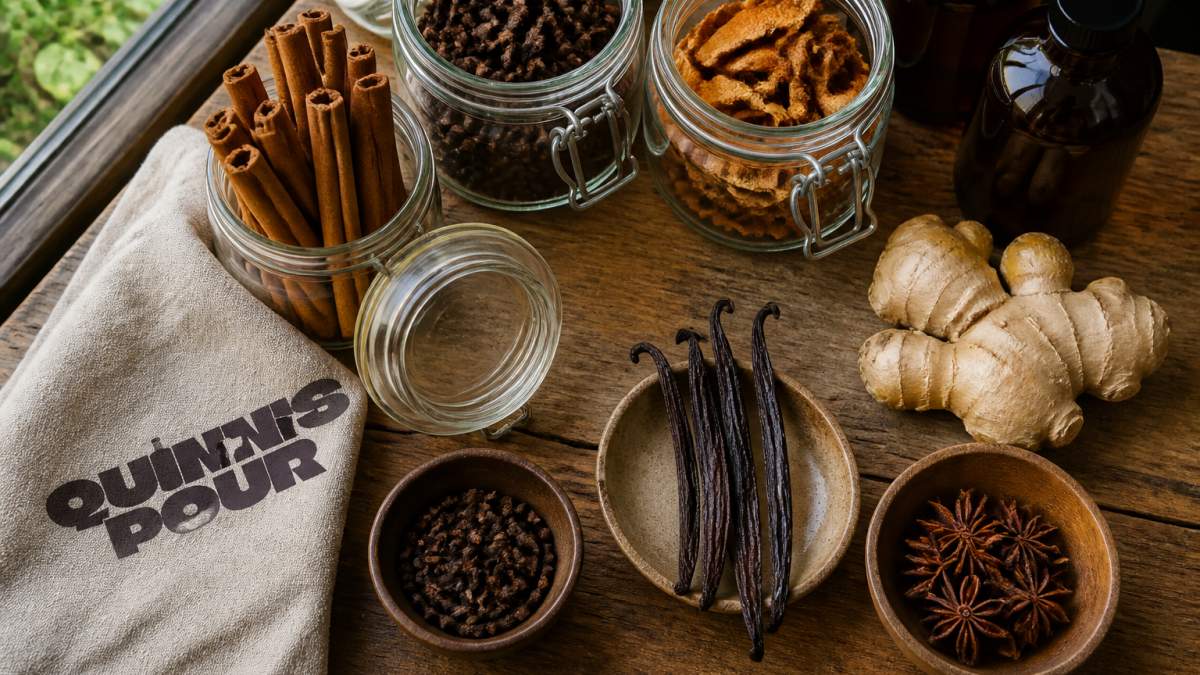
- Whole spices like cinnamon sticks, cloves, and star anise
- Fresh citrus peels (lemon, lime, orange)
- Dried fruits such as raisins or apricots
- Vanilla pods
- Ginger root
- Aromatic herbs like basil or thyme
Buy these from reputable suppliers who stock them fresh.

How to Make Spiced Rum From Scratch
Making rum with natural ingredients follows a straightforward process. Once you understand the basic steps, you can experiment with your own combinations.
Step 1: Select your base rum
Start with a good quality Caribbean rum as your base spirit. This is non-negotiable. The rum becomes the canvas for your natural ingredients. Think of it as choosing the right paint before adding your own brushstrokes.
Pro Tip
Avoid spiced rums that are already flavoured. You want a clean slate so your natural ingredients can shine without competing with existing flavours.
Step 2: Prepare your natural ingredients
Preparation is where many people rush. Taking time here makes the infusion process much smoother.
Wash your citrus fruits thoroughly and peel them carefully, avoiding the white pith.
Crack your cinnamon sticks slightly. For vanilla pods, split them lengthwise so the seeds can infuse properly.
Roughly chop any fresh ginger.
Measure everything. This helps you replicate successful batches later.
Step 3: Combine and infuse
Pour your chosen rum into a clean glass jar. Add your prepared ingredients slowly, tasting as you go.
Start with smaller quantities than you think you need. It's easier to add more than to fix an over-spiced batch.
Seal the jar tightly and place it somewhere cool and dark. A cupboard or pantry works perfectly.
How to Infuse Rum With Spices Properly
The infusion process is where infusing rum with spices becomes an art. Timing and temperature control determine whether your batch tastes balanced.
Timing and temperature
Infusion timing depends on what you're adding. Delicate ingredients like citrus peel need 2-3 weeks. Strong spices like cloves can handle 4-6 weeks.
Keep your infusing rum at room temperature, ideally between 15-20°C. Warmer temperatures speed up extraction. Cooler temperatures slow everything down.
Shake your jar gently every few days.
Watch Out
Don't leave your infusion longer than 8 weeks. Most spices over-infuse after this point. You can't fix over-infusion, you'll have to start again.
Testing for flavour balance
Start tasting after two weeks. Pour a small sample into a glass and let it sit for a minute.
Ask yourself:
- Is the spice flavour clear and distinct?
- Does it feel balanced or does one note dominate?
- Is there any bitterness or harshness?
- Would you want to drink this as is?
If the flavour is getting close but not quite there, give it another week. If it's already too strong, strain immediately and bottle.
Natural Ingredients for Spiced Rum That Work Best
Choosing the right natural ingredients for spiced rum makes the difference between a pleasant drink and something genuinely memorable.
Warming spices
Cinnamon, cloves, and nutmeg create the backbone of spiced rum. These warming spices are what most people think of when they imagine spiced rum flavour.
Cinnamon sticks infuse quickly and deliver warmth without harshness.
Cloves are potent. They release flavour steadily over time and can easily overwhelm other notes if you're not careful.
Black Spiced Vanilla N' Raisin Rum 70cl →
Nutmeg adds smoothness and complexity.
Star anise brings subtle sweetness and liquorice undertones. It complements citrus particularly well.
Citrus and fruity notes
Dried citrus peels brighten your infusion and cut through the richness of the base rum. Orange peel is the classic choice, it's versatile and plays nicely with warming spices.
Lemon peel adds sharpness and complexity.
Dried raisins or apricots contribute subtle sweetness without cloying. They balance spice and add body to the final product.
Fresh lime peel works if you want something brighter and more tropical.
Floral and aromatic additions
Vanilla pods add smoothness and depth.
Fresh basil brings unexpected complexity.
Ginger root adds warmth and a subtle spicy kick without the heaviness of ground spices.
Thyme adds herbal notes that complement citrus beautifully.
Key Takeaway
The best natural ingredients for spiced rum are ones you actually like the taste of. Start with what appeals to you, taste regularly, and adjust. Your palate is the best guide.
Common Mistakes to Avoid When Making Rum at Home
Learning how to make rum with natural ingredients means learning from others' mistakes.
Over-infusing is a common error. People assume longer equals better flavour. It doesn't. After a certain point, spices become bitter and harsh. Taste regularly and strain when the flavour is right, not when you think it should be ready.
Using low-quality base rum wastes your effort. Your natural ingredients can only improve what's already there.
Not measuring your ingredients makes replication impossible. If you stumble onto something brilliant, you'll want to make it again. Jot down exactly what you used.
Adding too many ingredients at once creates muddy, confused flavours.
Storing your infusion in clear glass exposes it to light damage. Use dark glass or keep jars in a dark cupboard.
Forgetting to label your jars is surprisingly common. You'll have three identical jars and no idea which one has what in it. Write the contents and start date on a label and stick it on.
Bottling and Storage for Maximum Flavour
Once your infusion tastes right, it's time to bottle and store it properly. This final step protects all the work you've done.
Strain your infusion through fine mesh or cheesecloth into a clean bowl. Don't squeeze the solids, let gravity do the work.
Pour your strained rum into dark glass bottles using a funnel. Leave about 2cm of headspace at the top.
Seal bottles tightly with cork or screw caps. Store them upright in a cool, dark place. A cupboard or wine rack works perfectly.
Your finished rum will keep for years if stored properly. The alcohol content preserves it. Over time, flavours meld and soften.
If you're looking to explore professionally crafted spiced rums made with natural ingredients, Quinn's Pour's Black Spiced Vanilla N' Raisin Rum demonstrates how expertly selected natural ingredients create complex, balanced flavours. It shows what's possible when natural spices, vanilla, and sun-dried raisins are combined with quality Caribbean rum through copper pot distillation.

Frequently Asked Questions
What's the difference between making rum and infusing rum?
Making rum involves fermenting and distilling sugar or molasses from scratch, a complex process requiring specialist equipment and knowledge. Infusing rum means starting with a quality base spirit and adding natural ingredients like spices, citrus, or botanicals to develop flavour. Home enthusiasts typically infuse rather than distil. Infusing is faster, safer, and produces excellent results with natural ingredients within weeks rather than months.
How long should you infuse rum with spices for the best flavour?
Most spiced rum infusions develop full flavour between 2 to 6 weeks, depending on the ingredients and your taste preference. Lighter spices like citrus may reach peak flavour in 2-3 weeks, whilst warming spices like cinnamon and cloves benefit from 4-6 weeks. Taste your infusion weekly after the second week to monitor development. Once you're happy with the flavour intensity, strain and bottle immediately to prevent over-extraction, which can turn bitter.
Can you make rum at home without artificial flavourings?
Yes, infusing rum with natural ingredients is straightforward and produces excellent results. Use pure Caribbean rum as your base, then add whole spices, dried fruit, citrus peels, vanilla pods, or fresh botanicals. Natural infusions develop complex, authentic flavours that rival commercial spiced rums. The key is using quality base spirit and allowing adequate infusion time.
What natural spices go well in rum?
Cinnamon, cloves, nutmeg, and star anise create warm, comforting base notes. Ginger adds spicy heat, whilst vanilla and caramel provide smoothness. Citrus peels bring brightness, and dried fruits like raisins or apricots add sweetness and complexity. Fresh basil, cardamom, and black pepper work for adventurous flavour combinations. Start with 2-3 complementary spices rather than many, as this helps you taste how each ingredient contributes. Quinn's Pour's Golden Spiced Citrus N' Basil Rum shows how basil and citrus can balance warming spices beautifully.
Making rum with natural ingredients at home is rewarding and surprisingly achievable. You control every element, from the base spirit to the final flavour profile. The process teaches you what you actually like in spiced rum, which makes appreciating premium craft rums even more satisfying. Start simple, taste regularly, and don't rush the infusion process. Your patience will be rewarded with a drink you've genuinely made yourself.


