

· By Editorial Team
How to Make Homemade Spiced Rum Infusions
Table of Contents
- What You'll Need to Make Spiced Rum Infusions
- Best Spices for Rum Infusion
- Step-by-Step: Making Your Homemade Spiced Rum Infusion
- How Long to Infuse Spiced Rum for Best Results
- Straining Homemade Infusions Properly
- Common Mistakes to Avoid
- Storing and Enjoying Your Finished Infusion
- Frequently Asked Questions
Last Updated: September 30, 2026
Making spiced rum infusions at home transforms a simple bottle of rum into something extraordinary. You control every flavour, every spice, and the infusion timeline. The result is a spirit that tastes nothing like mass-produced alternatives.
This guide from Quinn's Pour walks you through creating your own spiced rum infusions from start to finish. Whether you're a seasoned home bartender or exploring craft spirits for the first time, you'll discover how straightforward the process actually is.
What You'll Need to Make Spiced Rum Infusions
Before you begin making spiced rum infusions, gather your ingredients and equipment. The good news: you probably have most of it already.
Essential items:
- A bottle of quality rum (ideally 70cl)
- A glass jar with a tight-fitting lid (1 litre or larger)
- Whole spices (see next section for specifics)
- A fine-mesh strainer or cheesecloth
- A funnel
- Labels and a marker for dating your infusion
Optional but helpful:
- A dark glass bottle for storage
- Coffee filters for extra-fine straining
- A kitchen scale for precise measurements
- Muslin cloth for final filtering
The quality of your base rum matters. A smooth, neutral Caribbean rum works beautifully as your foundation. Quinn's Pour produces copper pot distilled rums crafted from premium Caribbean spirits with natural ingredients.
Start with a clean jar. Wash it thoroughly and dry it completely. Any moisture or residue affects your final infusion.
Best Spices for Rum Infusion
The spices you choose define your infusion's character. Some create warmth and depth. Others add brightness and complexity.
Warm spices that work beautifully
Warm spices are the backbone of most spiced rum infusions. They develop rich, comforting flavours that feel natural in rum.
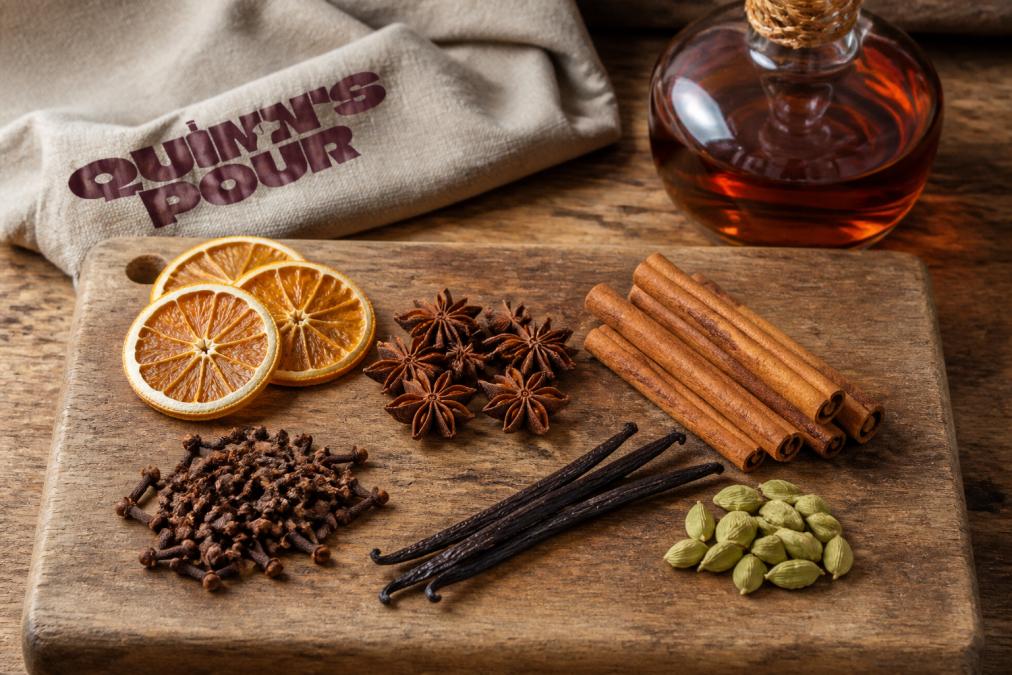
Cinnamon sticks deliver warmth without overpowering. Use one or two sticks per 70cl bottle. They infuse quickly, reaching peak flavour within two weeks.
Cloves bring intensity. Start with just three or four whole cloves. They're potent and can easily dominate if you use too many.
Star anise adds a subtle liquorice note. One or two stars per bottle creates intrigue without becoming medicinal.
Vanilla pods create smoothness and sweetness. Split one pod lengthways and scrape the seeds into your rum. The pod itself continues releasing flavour throughout infusion.
Cardamom pods offer spice with a floral edge. Lightly crush three to five pods before adding them. This releases their oils.
Nutmeg works best grated fresh or as a small piece of whole nutmeg. Use sparingly. A quarter teaspoon of freshly grated nutmeg transforms a batch.
Citrus and fresh aromatics
Citrus brightens infusions and balances warmth. Fresh aromatics add complexity.
Dried orange peel brings zesty brightness. Remove peel from one orange with a vegetable peeler, avoiding the white pith. Dry it for a day, then add to your rum.
Lemon zest adds sharp, clean notes. Use a microplane to remove only the yellow outer layer. White pith tastes bitter.
Ginger creates a warming kick. Slice fresh ginger thinly or use dried ginger pieces. Three or four slices per bottle work well.
Fresh basil might sound unusual, but it creates sophisticated, herbal notes. Add three or four leaves. Remove them after five days to prevent overpowering the infusion.
Allspice berries taste like a blend of cinnamon, clove, and nutmeg. Use five to eight berries per bottle.
These aromatics infuse faster than warm spices. Check your infusion daily once you add citrus or fresh herbs.
Step-by-Step: Making Your Homemade Spiced Rum Infusion
The actual process of making spiced rum infusions is straightforward. Follow these steps carefully.
Step 1: Prepare your ingredients and bottle
Measure your spices before adding them to the jar. This prevents guessing later and helps you recreate successful batches.
Write down exactly what you're adding. Include quantities and dates. This record becomes invaluable once you've made several infusions.
If using fresh ingredients like ginger or citrus peel, pat them dry with paper towels. Excess moisture introduces unwanted water into your rum.
Pour your rum into the clean glass jar. Fill it to the top, leaving minimal air space. Oxygen exposure slows infusion and can create unwanted flavours.
Step 2: Add spices to your rum
Add your chosen spices directly to the rum. There's no need to heat anything or prepare the spices beyond basic cleaning.
Start with smaller quantities than you think you need. You can always add more. Removing excess spice from an infusion is difficult.
For a balanced spiced rum infusion, try this starting point:
- Two cinnamon sticks
- Four whole cloves
- One star anise
- Half a vanilla pod
- Three cardamom pods
- One piece of fresh ginger (roughly 2cm)
- Zest from half an orange
Seal the jar tightly. This is crucial. A loose lid allows rum to evaporate and spices to oxidise.
Step 3: Seal and store
Store your sealed jar in a cool, dark place. A kitchen cupboard or pantry works perfectly. Avoid direct sunlight, which degrades flavour and colour.
Black Spiced Vanilla N' Raisin Rum 70cl →
Room temperature is ideal. You don't need a fridge. Cold temperatures slow infusion.
Shake the jar gently every few days. This helps spices release their flavours evenly throughout the rum.
How Long to Infuse Spiced Rum for Best Results
The timeline for making spiced rum infusions varies depending on which spices you've used.
Warm spices like cinnamon, cloves, and vanilla typically need two to four weeks. At two weeks, taste your infusion. If the flavour feels light, wait another week or two.
Citrus and fresh aromatics infuse much faster. Check your infusion daily after adding these ingredients. Most reach peak flavour within five to seven days.
Ginger develops quickly. Three to five days usually provides noticeable flavour without becoming too intense.
The longer you infuse, the deeper the flavours become. However, there's a point where infusion can tip into over-extraction. Your spices start tasting harsh or bitter.
Start tasting after two weeks. Dip a clean spoon into your infusion and try it neat. Once the flavour satisfies you, it's time to strain. Don't wait for a predetermined date. Your palate is the best guide.
Temperature affects infusion speed. Warmer kitchens speed up the process. Cooler rooms slow it down slightly.
Straining Homemade Infusions Properly
Proper straining determines your final infusion's clarity and smoothness.
First strain: Pour your infusion through a fine-mesh strainer into a clean bowl. Let it drain completely. Don't rush this step.
Second strain: Pour the infusion through cheesecloth or a coffee filter into your final storage bottle. This removes fine particles and sediment.
Some people prefer a third pass through fresh cheesecloth. This creates crystal-clear infusions, though it takes patience.
Discard all spent spices. Don't be tempted to reuse them. They've given everything they have to offer.
If your infusion looks cloudy after straining, it will gradually clear over the next few weeks. Tiny particles settle to the bottom naturally.
Common Mistakes to Avoid
Learning what goes wrong helps you create perfect infusions every time.
Using ground spices instead of whole spices creates cloudy, gritty infusions. Whole spices release flavour gradually. Ground spices dump everything at once, then leave sediment behind.
Overcrowding the jar with spices produces harsh, unbalanced flavours. More spice doesn't mean better infusion. Restraint creates elegance.
Forgetting to seal the jar properly allows rum to evaporate and oxidation to occur. Check your seal before storing.
Infusing in direct sunlight degrades colour and flavour. Dark storage is essential.
Adding too many fresh ingredients at once creates muddy, confused flavours. Fresh herbs and citrus are potent. Use them sparingly.
Straining too early means you miss peak flavour development. Give your infusion time to mature.
Leaving spices in too long can create bitter, over-extracted tastes. Monitor your infusion regularly. Remove spices once flavour reaches your preference.
Storing and Enjoying Your Finished Infusion
Once strained and bottled, your spiced rum infusion keeps for months in cool, dark conditions.
Storage bottles should be glass with tight-fitting lids. Dark glass protects against light damage. Avoid plastic, which can interact with the spirit.
Shelf life extends well beyond a year when stored properly. The high alcohol content preserves the infusion naturally.
Serving suggestions vary depending on your infusion's flavour profile. Warm-spiced infusions taste beautiful served neat over ice. Citrus-forward infusions work brilliantly in cocktails.
Gifting your infusion makes a thoughtful, personal present.
| Spice | Quantity per 70cl | Infusion Time | Best For |
|---|---|---|---|
| Cinnamon stick | 2 sticks | 2-4 weeks | Warm, comforting base |
| Cloves | 3-4 whole | 2-4 weeks | Depth and intensity |
| Vanilla pod | ½ pod | 2-4 weeks | Smoothness and sweetness |
| Ginger | 2cm slice | 3-5 days | Warming kick |
| Orange peel | From 1 orange | 1-2 weeks | Bright, zesty notes |
| Star anise | 1-2 stars | 2-3 weeks | Subtle liquorice edge |
Frequently Asked Questions
What are the best spices to use for homemade spiced rum infusions?
Cinnamon sticks, vanilla pods, cloves, star anise, and cardamom create a warm, balanced infusion. For citrus notes, add dried orange peel or lemon zest. Start with 3-4 spices rather than too many, which can muddy the flavour. Quinn's Pour's Black Spiced Vanilla N' Raisin Rum (£40.00) demonstrates how vanilla and warming spices work beautifully together, offering inspiration for your own combinations.
How long should you infuse rum for the best flavour?
Most spiced rum infusions reach optimal flavour in 2-4 weeks. Lighter spices like citrus peel infuse faster (10-14 days), whilst harder spices such as cinnamon and cloves need 3-4 weeks to fully develop. Taste your infusion weekly after the first week to find your preferred strength. Avoid leaving it longer than 6-8 weeks, as some spices can become overpowering.
What is the best way to strain homemade spiced rum infusions?
Use a fine-mesh strainer lined with cheesecloth or coffee filters to remove all solids. Pour slowly to avoid disturbing sediment at the bottom. For crystal-clear results, strain twice: once through cheesecloth, then again through a fine filter. Allow the liquid to settle overnight before the final pour into clean bottles. This ensures your finished infusion has a professional appearance.
Can I make vegan-friendly spiced rum infusions at home?
Yes. Most spices are naturally vegan, and all standard rums are vegan-friendly. The key is checking your base rum's production method. Quinn's Pour's rums are 100% natural and vegan-friendly. Avoid any additives like honey or animal-derived fining agents when creating your blend.


