

· By Editorial Team
How to Build a Home Collection of Craft Spirits
Table of Contents
- Start with Your Flavour Preferences
- Understanding Craft Spirits Collection for Beginners
- How to Taste Craft Spirits at Home
- How to Store Spirits at Home Properly
- Choosing Quality Craft Spirits: What to Look For
- Building Your Collection Without Regret
- Frequently Asked Questions
Last Updated: October 15, 2026
Start with Your Flavour Preferences
Learning how to build a home collection of craft spirits starts with one simple question: what do you actually enjoy drinking? Too many people approach this backwards. They chase what they think they should like, or what's trending, rather than what genuinely excites their palate.
Your personal taste is the foundation. If you prefer warm, spiced notes over bright citrus, lean into that. If you're drawn to vanilla and caramel warmth, build around those flavours. The best collections aren't the ones with the most bottles or the highest price tags. They're the ones you reach for again and again.
Pro Tip
Start a tasting journal. Note which spirits you've tried and what flavours stood out. After a few entries, patterns will emerge. Your preferences become your roadmap.
Understanding Craft Spirits Collection for Beginners
What Makes a Spirit 'Craft'
A craft spirit is one made in small batches using traditional methods and quality ingredients, often by independent distillers who focus on flavour over volume. The defining characteristic isn't a legal standard, it's an approach. Craft producers typically control their production process from start to finish, which means they're directly responsible for the final product.
This matters for your collection because craft spirits tend to have more personality. They're not engineered for mass appeal. They're made to taste like something specific, something intentional. When you're building a home collection of craft spirits, you're investing in bottles with stories and character.
The contrast with mass-produced spirits is stark. Large-scale producers optimise for consistency and shelf life. Craft producers optimise for flavour. Both approaches have merit, but they're fundamentally different philosophies.
Building Your First Bottles
Start small. Three to five bottles is a solid foundation for a home collection of craft spirits. This gives you enough variety to explore without overwhelming yourself or your space.
Your first bottles should reflect your flavour preferences:
- One core spirit you love, something you'd drink regularly
- One contrasting spirit, different in character from your first choice
- One to explore, something slightly outside your comfort zone
- Optional: a bundle for tasting, smaller bottles to sample multiple expressions
Quinn's Pour's Companion's Gift Pack works well here. It gives you three distinct spiced rum expressions in smaller 15ml bottles, so you can taste the differences without committing to full bottles. The Golden Spiced Rum brings bright citrus and basil notes. The Black Spiced Rum offers deep vanilla and raisin warmth. The Coffee Spiced Rum delivers indulgent caramel and roasted sweetness.

Key Takeaway
Your first bottles should be ones you'll actually drink, not ones you'll save "for special occasions" that never come.
How to Taste Craft Spirits at Home
Tasting craft spirits properly transforms what you experience. It's not complicated, but it does matter.
Start by pouring a small measure, about 30ml, into a clean glass. Use a tulip-shaped glass if you have one. The shape concentrates the aromas toward your nose, which is where most of the flavour experience happens.
Look at the colour. Swirl gently. Smell first. This is where the real tasting begins. Your nose picks up more detail than your taste buds ever will. Spend time with the aroma. Notice what comes forward, spice, citrus, vanilla, caramel, wood, or something else entirely.
Then taste. Let the spirit sit on your tongue for a moment. Notice the initial flavour, the mid-palate, and the finish. How long does the flavour linger? Does it change as it warms in your mouth?
Add a small splash of water. This opens up the spirit and releases additional aromas and flavours. Taste again. You'll often find new notes you missed the first time.
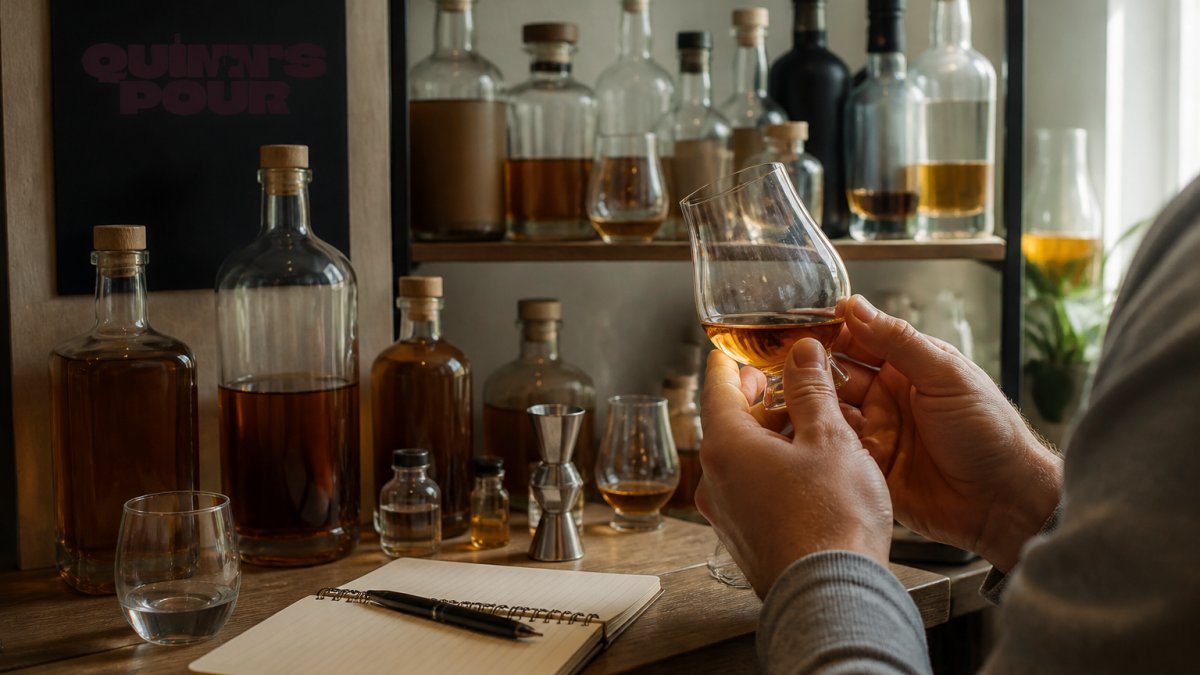
Keep notes as you taste. What flavours did you pick up? Did the water change your experience? Over time, these notes become a record of your palate development. You'll start to understand what you're drawn to.
Watch Out
Never taste spirits on an empty stomach. Food helps your palate work properly and keeps you sharp for longer tasting sessions.
How to Store Spirits at Home Properly
How you store your collection matters more than most people realise. Spirits are stable, but they're not indestructible.
Temperature and Light Control
Store your spirits in a cool, dark place. Temperature fluctuations are the enemy. Ideally, your storage space stays between 12°C and 18°C. A kitchen cupboard away from the cooker works. A corner of a bedroom away from direct sunlight works. A garage in an unheated shed does not, the temperature swings will damage the spirit over time.
Light is equally important. Sunlight breaks down the compounds that give spirits their colour and character. UV light accelerates this process. A dark cupboard beats a display shelf every time, even if the display looks nicer.
Avoid storing spirits near radiators, above ovens, or in direct sunlight through windows. These spots experience temperature swings and light exposure that degrade the spirit.
Bottle Position and Humidity
Store bottles upright, not on their sides. This keeps the cork from drying out and prevents the spirit from sitting against the cork seal for extended periods. A dried-out cork lets air in, which oxidises the spirit faster.
For most home collections, a cupboard in a bedroom or hallway is ideal. It's cool, dark, and stable. It's not fancy, but it protects your bottles.
Choosing Quality Craft Spirits: What to Look For
When you're learning how to build a home collection of craft spirits, quality signals matter. Here's what to evaluate.
Production method, Look for spirits made in small batches using traditional techniques. Copper pot distillation, for example, creates different flavour profiles than industrial column stills. The production method shapes the final product.
Ingredient transparency, Quality producers list their ingredients clearly. Natural spices and flavours, rather than artificial additives, signal a commitment to craft. Vegan-friendly credentials matter if that's important to you.
Flavour complexity, Taste before you buy if possible. Does the spirit reveal multiple flavour layers, or does one note dominate? Complexity suggests careful blending and quality base spirit.
Brand values, Some producers align with causes beyond just making spirits. Quinn's Pour, for instance, supports dog rescue and welfare initiatives alongside producing copper pot distilled spiced rums. If ethical production and purpose matter to you, that's worth considering.
Consistency, Check whether the producer maintains consistent quality across batches. Reviews and community feedback help here. Craft doesn't mean erratic.
The Best of Both Pack from Quinn's Pour pairs two distinct expressions, Golden Spiced Rum and Black Spiced Rum, at £75.00. This bundle lets you explore contrasting flavour profiles in one purchase. The Golden brings brightness and zest. The Black brings depth and warmth. Together, they show what range is possible within a single producer's work.
Pro Tip
Join online spirits communities and forums. Real drinkers share honest feedback about flavours, value, and consistency. That's more reliable than marketing copy.
Building Your Collection Without Regret
Regret in spirits collecting usually comes from one of three mistakes: buying too fast, chasing hype, or ignoring your actual taste.
Buy slowly. Add one or two bottles every few months, not ten at once. This gives you time to taste, learn, and refine what you actually want. It also spreads the cost.
Ignore the trends. If everyone's talking about a particular spirit but it doesn't match your flavour profile, skip it. Your collection should reflect you, not Instagram.
Taste before you commit. If possible, try a spirit in a bar or at a tasting event before buying a full bottle. The Companion's Gift Pack from Quinn's Pour (£25.00) solves this problem for their three expressions. You get 15ml of each in one package. That's enough to properly evaluate each one before deciding whether to buy full bottles.
Start with bundles. Bundles like The Rum Litter Pack (£105.00) give you three full bottles at a better value than buying separately. They're also curated selections, which removes some decision-making burden when you're starting out.
The real test of a good collection isn't how impressive it looks. It's whether you're opening bottles and enjoying them. A modest collection of spirits you love beats a large collection of bottles you never pour.
Building a home collection of craft spirits is about understanding your taste, learning how to evaluate quality, and storing your bottles properly. Start with your flavour preferences. Taste thoughtfully. Store carefully. Add bottles slowly. The collection that matters most is the one you actually drink.
At Quinn's Pour, we believe the best collections tell a story about the person who built them. Your choices reflect what you value, whether that's flavour complexity, ethical production, or supporting causes you care about. Start with what excites you, and let your collection grow from there.
Frequently Asked Questions
How do I start a craft spirits collection at home?
Begin by choosing spirits that match your taste preferences rather than collecting randomly. Start with 3-5 quality bottles from different styles, perhaps a spiced rum, a whisky, and something unique. Invest in proper storage first: a cool, dark cupboard away from direct sunlight. As your palate develops, add bottles intentionally rather than impulse-buying. Many collectors find tasting packs, like Quinn's Pour's Companion's Gift Pack, helpful for discovering their favourites before committing to full bottles.
What should I look for on a craft spirits label?
Check the production method: copper pot distilled spirits often signal higher quality and more complex flavours. Look for natural ingredients listed transparently, avoid anything with artificial additives. Verify the origin and distillery name; authentic craft producers are proud to share their location. Alcohol by volume (ABV) matters too. For ethical consumers, certifications like vegan-friendly status matter. Read tasting notes to understand flavour profiles before purchasing.
How many bottles should a home spirits collection have?
There's no fixed number, quality beats quantity. Most collectors start with 5-10 bottles representing different styles, then grow organically. A balanced beginner collection might include 2-3 spiced rums with distinct flavour profiles, a whisky, and 1-2 unique expressions. The key is drinking and enjoying what you own rather than letting bottles gather dust. Many enthusiasts find 15-25 bottles a comfortable sweet spot for home enjoyment without overwhelming storage needs.
How can I taste and compare spirits at home?
Pour small amounts (around 30ml) into clean, clear glasses to observe colour. Nose each spirit first without tasting, this reveals initial aromatics. Take small sips, letting the liquid coat your mouth before swallowing, noticing how flavours evolve. Try tasting in order from lightest to heaviest to avoid palate fatigue. Take breaks between samples and cleanse your palate with water or plain crackers. Keep tasting notes describing what you notice. This method helps you understand your preferences and identify which bottles deserve space in your collection.


